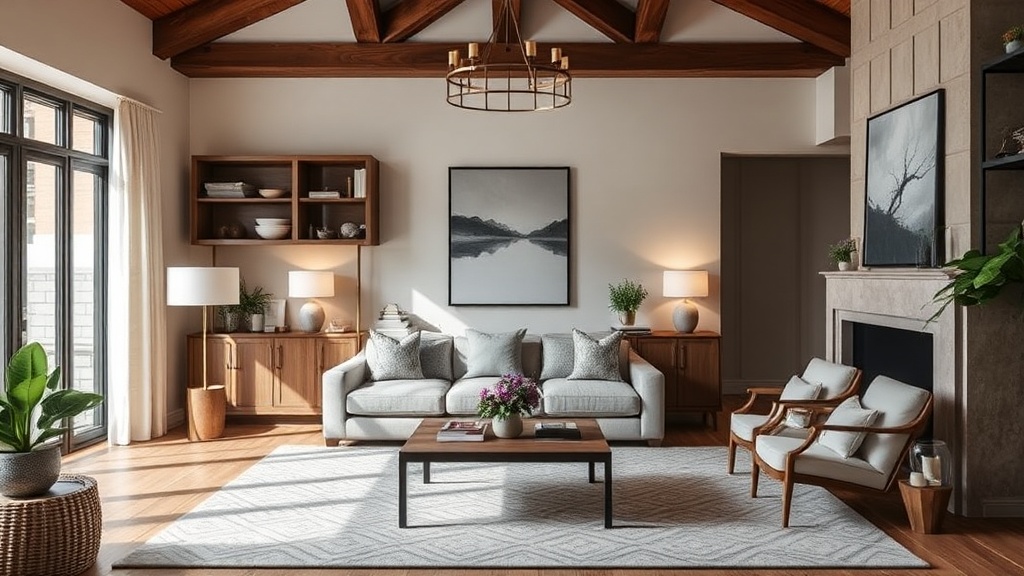
5 Timeless Decor Styles to Transform Your Living Space

The Serenity of Japandi
Mid-Century Modern Charm
Industrial Urban Edge
Bohemian Eclectic Spirit
Minimalist Sophistication
In my years as an architect, I spent a lot of time obsessing over structural integrity and the way light hits a cantilevered roof. But when I transitioned into design education, I noticed a recurring problem: people were terrified of "style." They viewed interior design as a high-stakes game of gatekeeping, where one wrong velvet pillow could ruin a room forever.
The truth? Style isn't a rigid set of rules; it is a language. When you understand the vocabulary of a specific aesthetic, you stop buying "stuff" and start composing spaces. You move from decorating to designing. Whether you are working with a sprawling open floor plan or trying to master the minimalist aesthetic in a small space, having a foundational direction prevents that cluttered, "I-bought-this-on-sale" feeling that plagues many homes.
Today, we are breaking down five timeless decor styles. I won't give you a shopping list of expensive brands, but I will give you the architectural DNA of each so you can build a look that actually works on a real-world budget.
1. Mid-Century Modern: The Intersection of Form and Function
Mid-Century Modern (MCM) is often misunderstood as just "furniture with tapered legs." In reality, MCM is a design philosophy born from the post-war era that prioritizes organic shapes, clean lines, and a seamless connection between the indoors and outdoors. It is the aesthetic of functionality meeting artistry.
The Anatomy of MCM
- Geometric Precision: Look for silhouettes that are sleek and uncluttered. Think of the way a well-designed chair uses a single, continuous curve to support the body.
- Natural Materials: Teak, walnut, and oak are the heavy hitters here. The goal is to bring the warmth of the outdoors inside.
- A Pop of Saturation: While the base of the room should be neutral, MCM thrives on "earthy-meets-vibrant" accents—mustard yellows, avocado greens, or burnt oranges.
Sloane’s Pro Tip: Don't feel pressured to buy an authentic Eames lounge chair to achieve this look. The "modern" in MCM refers to the silhouette. Look for furniture with tapered wooden legs and low profiles. This keeps the sightlines open, making your room feel larger and more structured.
2. Scandinavian: The Art of Hygge and Light
If Mid-Century Modern is about the shape of the object, Scandinavian (Scandi) design is about the feeling of the space. It is rooted in the necessity of light. In Nordic climates, light is a precious commodity, and the design reflects a desire to maximize every lumen.
The Anatomy of Scandi
- The Neutral Palette: Whites, soft greys, and muted beiges create a canvas that reflects light rather than absorbing it.
- Texture Over Color: Because the color palette is restrained, you must use texture to prevent the room from feeling clinical. Think sheepskin throws, linen curtains, and chunky knit blankets.
- Minimalism with Purpose: Every object should serve a function or bring genuine joy. It is not about empty surfaces, but about intentionality.
To truly master this, you must understand how to manipulate light. A single overhead bulb will never suffice in a Scandi-inspired room. You need to master the golden rule of layered lighting to create depth through ambient, task, and accent light. This prevents the "flat" look that often ruins minimalist homes.
3. Industrial: Raw, Unapologetic, and Structural
Industrial design is the architectural equivalent of a conversation between the past and the present. It celebrates the "bones" of a building. Where other styles try to hide the plumbing or the brick, Industrial design puts it on a pedestal. It is a style that values the patina of age and the honesty of raw materials.
The Anatomy of Industrial
- Exposed Elements: Brick walls, concrete floors, and exposed ductwork are the hallmarks. If you live in a standard drywall apartment, you can mimic this with textured wallpapers or reclaimed wood accents.
- Metal and Wood: The juxtaposition of cold metal (iron, steel, copper) against warm, weathered wood creates a balanced tension.
- The Color Palette: Think of a city skyline at dusk. Deep charcoals, rusted oranges, navy blues, and plenty of black.
The Budget Hack: Industrial style is incredibly friendly to the DIYer. You don't need high-end metal furniture; a reclaimed wooden dining table paired with black metal stools can anchor an entire room. If you are looking to refresh your space without a total overhaul, consider high-low design hacks to mix vintage industrial finds with modern, affordable pieces.
4. Transitional: The Sophisticated Middle Ground
Many people struggle to choose between "Traditional" (which can feel stuffy and dated) and "Modern" (which can feel cold and uninviting). This is where Transitional design lives. It is a curated blend of both, creating a space that feels established yet fresh.
The Anatomy of Transitional
- Balanced Symmetry: While modern design often embraces asymmetry, transitional design leans into the comfort of symmetry. Think matching end tables or a centered art piece.
- Softened Lines: You might have a traditional rolled-arm sofa, but it is paired with a sleek, modern coffee table. The goal is to soften the edges of strict modernism.
- Neutral Tones with Texture: The palette remains sophisticated—creams, taupes, and soft greys—but the "interest" comes from high-quality textiles like velvet or silk.
Transitional design is perfect for those who want a home that feels "expensive" without being museum-like. It is an excellent choice if you want a space that evolves easily with the seasons. For example, as the weather shifts, you can easily transition your look by incorporating seasonal elements, much like how one might prepare for a seasonal harvest in the garden, bringing organic textures into your living room.
5. Japandi: The Intersection of Wabi-Sabi and Scandi
Japandi is perhaps the most significant trend of the last few years, and for good reason. It is a hybrid of Japanese minimalism and Scandinavian functionality. It takes the "Hygge" of the North and marries it with the "Wabi-Sabi" (the beauty of imperfection) of the East.
The Anatomy of Japandi
- Organic Imperfection: Unlike the starkness of pure minimalism, Japandi embraces natural textures that show age—a cracked ceramic vase, a hand-woven basket, or a weathered wooden stool.
- Low Profile Furniture: Taking a cue from traditional Japanese interiors, much of the furniture is kept low to the ground, creating a sense of groundedness and calm.
- Earth-Tone Palette: Move away from the cool greys of Scandi and toward the warmer, earthier tones of Japan: terracotta, sand, ochre, and deep olive.
Japandi is more than an aesthetic; it is a way to cultivate mindfulness within your home. By reducing visual noise, you create a sanctuary. This sense of rhythm and natural alignment is vital for well-being. Just as one might use music-driven mindfulness routines to center the mind, a Japandi space centers the senses through tactile and visual harmony.
How to Choose Your Direction
You don't have to pick just one. In fact, the most successful rooms often blend elements of two. A Mid-Century Modern living room with a Japandi influence (clean lines plus organic, imperfect textures) is a foolproof way to create a space that feels both curated and lived-in.
To find your direction, stop looking at Pinterest boards for a moment and look at your actual life. Ask yourself:
- How do I want to feel in this room? (Energized? Calm? Grounded?)
- What is the structural reality of my space? (Do I have high ceilings to play with Industrial elements, or low light that requires a Scandi approach?)
- What materials do I naturally gravitate toward? (Do you love the warmth of wood or the sleekness of metal?)
Design is not about following a trend; it is about understanding the anatomy of a space and filling it with intention. Whether you are looking for a budget-friendly spring refresh or a complete architectural overhaul, start with these foundations. Build from the ground up, and the "good taste" will follow naturally.