How to Fix a Living Room That Feels “Off” (The Architectural Breakdown You Were Never Taught)

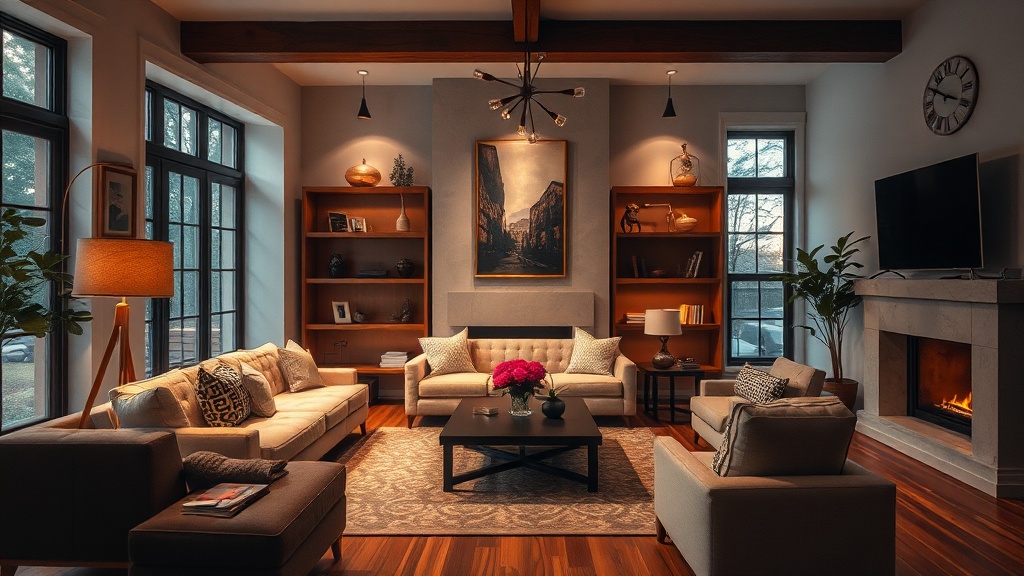
Let’s look under the hood of your living room—the one that technically has all the right pieces but still feels like it’s slightly… misfiring. You’ve got a sofa, a rug, a coffee table, maybe even a lamp you’re emotionally attached to. And yet, the space doesn’t land. That’s not a taste issue. That’s a structural problem.
This is where most design advice fails you. It focuses on objects instead of relationships. A good room isn’t about what you bought—it’s about how those pieces interact across scale, proportion, and tension. We’re going to fix that.
Step 1: Diagnose the Real Problem (It’s Almost Never What You Think)
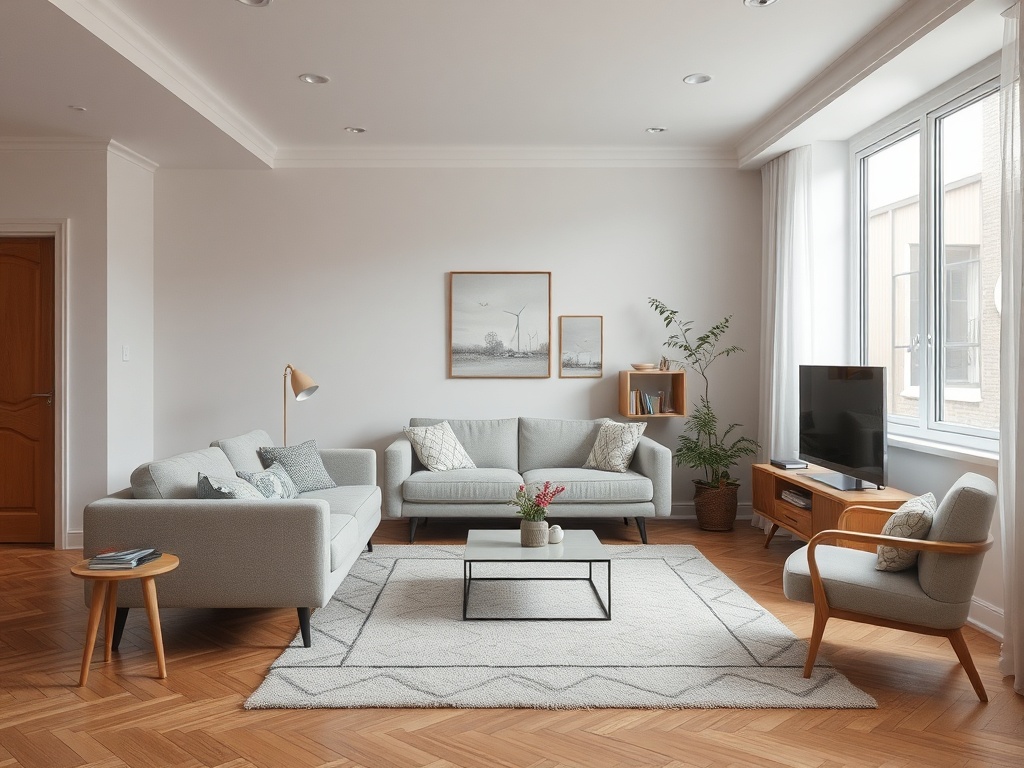
Before you buy a single thing, we need to identify the root issue. Most “off” rooms suffer from one of three structural failures:
- Scale mismatch: Your rug is undersized, your art is timid, or your furniture is floating like it’s avoiding commitment.
- Poor anchoring: There’s no visual gravity—nothing tying the room together.
- Lack of contrast: Everything is the same tone, texture, or height (hello, sad beige monotony).
(For the nerds in the back: this is a failure of spatial hierarchy and visual weight distribution.)
Step 2: Fix the Rug—Your Primary Anchor
The rug is not decoration. It is infrastructure. If it’s wrong, everything built on top of it collapses visually.
Here’s the rule: your rug should be large enough that at least the front legs of all major furniture pieces sit on it. Ideally, all legs are on. If your rug is floating in the middle like a postage stamp, the room will feel disconnected—because it is.
The Splurge vs. The Save: Spend on the rug. This is your foundation layer. Save on side tables and accessories.
Step 3: Rebuild Your Layout (Stop Pushing Everything Against the Wall)
If your instinct is to line furniture against the perimeter, we need to talk. That’s not design—it’s avoidance.
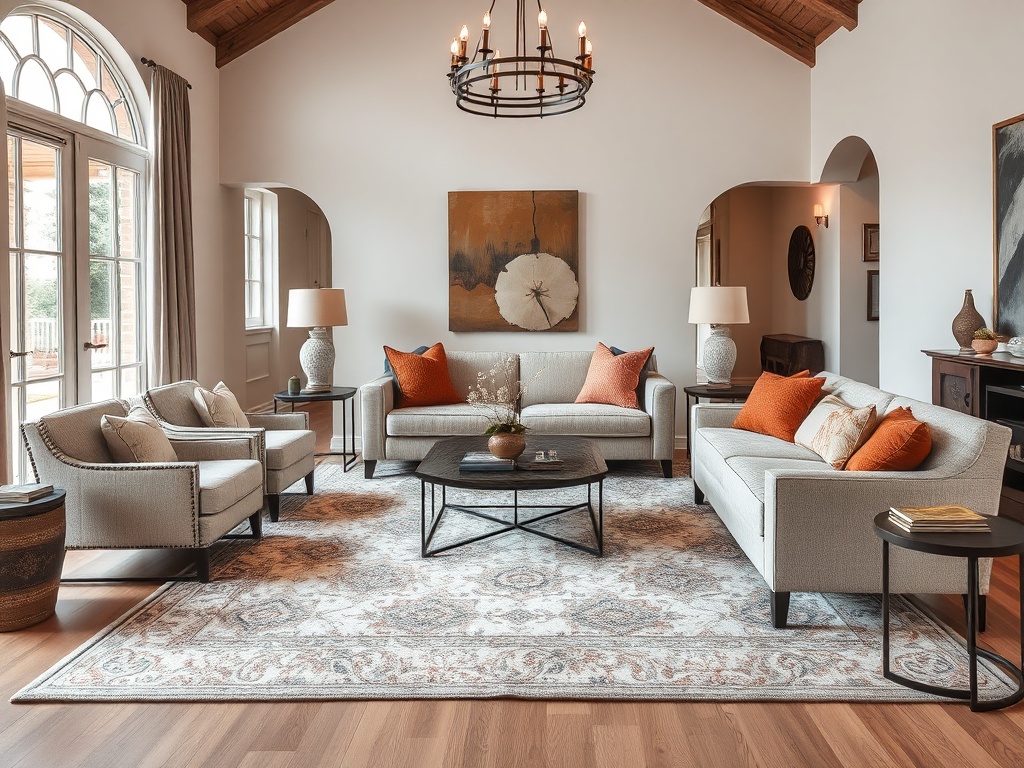
Pull your seating inward to create a defined conversation zone. Think of it as creating a “room within a room.” This introduces tension and intimacy.
(Yes, even in small spaces. Especially in small spaces.)
Step 4: Correct the Height Relationships
Most rooms fail vertically. Everything sits at the same height, creating a flat, lifeless composition.
- Your coffee table should sit roughly 1–2 inches lower than your sofa seat height.
- Table lamps should land at eye level when seated.
- Art should be centered at approximately 57–60 inches from the floor (gallery standard).
This is how you create rhythm. Without it, your room reads like a monotone sentence.
Step 5: Introduce Material Tension (This Is Where Rooms Get Interesting)
If everything in your room is smooth, matte, and neutral, you don’t have a design—you have a waiting room.
You need contrast:
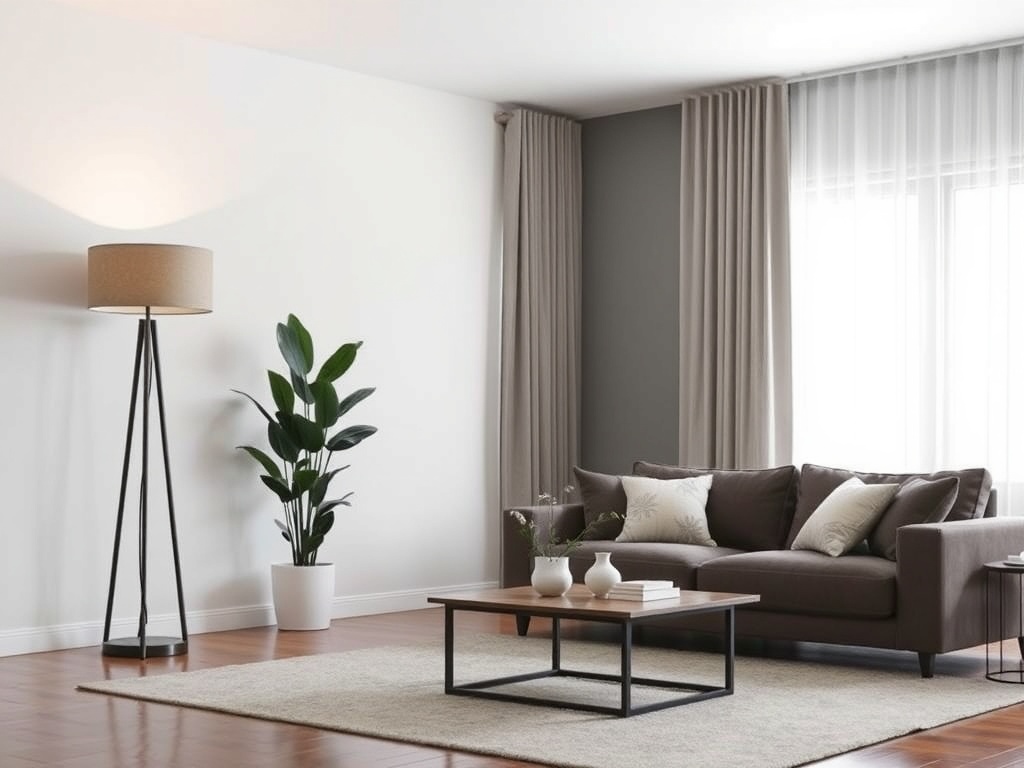
- Soft + hard (linen sofa with a stone or wood table)
- Matte + reflective (plaster walls with unlacquered brass accents)
- Old + new (vintage textile over a clean-lined sofa)
This is what gives a room a pulse.
Step 6: Fix Your Lighting (The Silent Killer)
Overhead lighting alone is the fastest way to flatten a space. You need layers:
- Ambient (general light)
- Task (reading lamps)
- Accent (highlighting texture or art)
And for the love of architectural integrity: avoid integrated LEDs. If you can’t change the bulb, you’re buying a future landfill contribution.
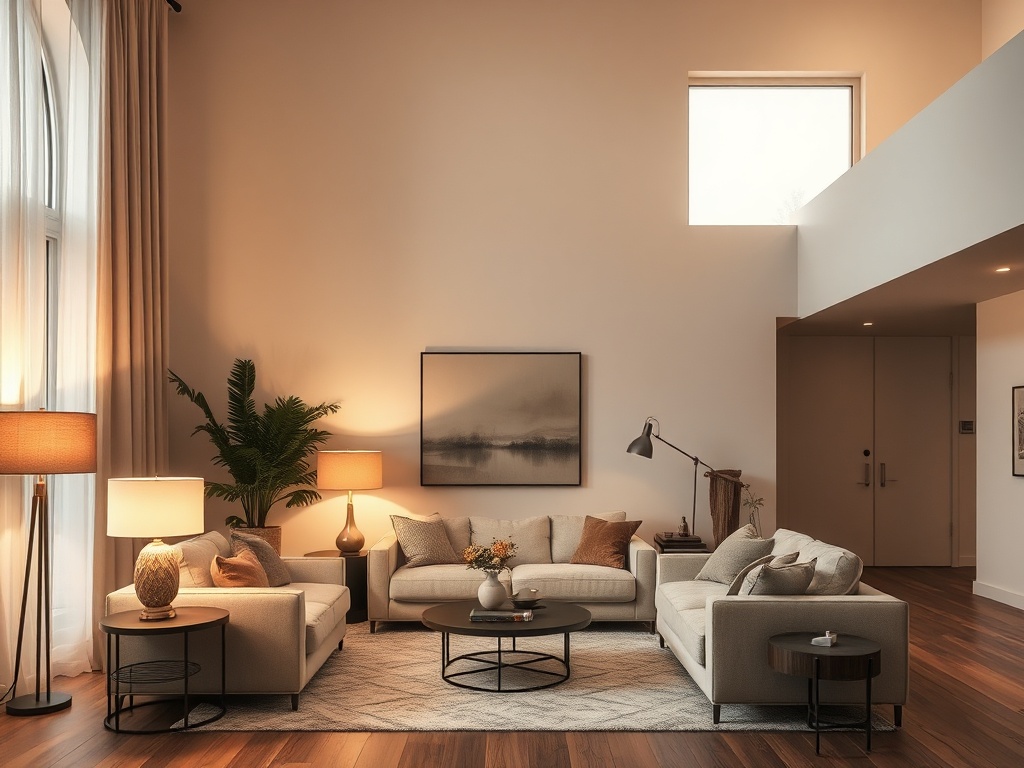
Step 7: Scale Your Art Like You Mean It
Undersized art is one of the most common—and most painful—mistakes. If your artwork looks like it’s apologizing for being there, it’s too small.
A good rule: art above a sofa should span roughly 2/3 to 3/4 the width of the sofa. Anything smaller breaks the visual balance.
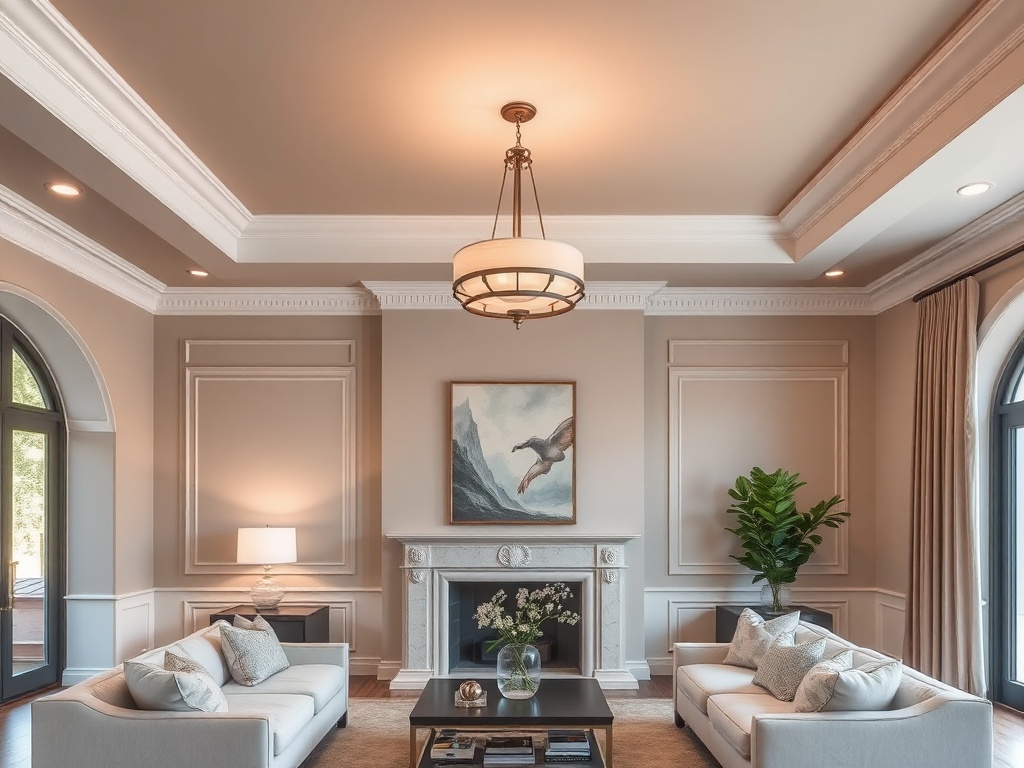
Step 8: Address the Fifth Wall (Yes, the Ceiling)
The ceiling is not a blank afterthought. It’s your largest uninterrupted plane.
Even a subtle shift—like a warmer white, a soft tint, or a textured finish—can dramatically change how the room feels. This is advanced territory, but it’s where good rooms become great ones.
Step 9: Edit Ruthlessly
More objects do not equal more design. In fact, they often dilute it.
Remove anything that doesn’t contribute to the composition. Every piece should earn its place through function, material, or visual weight.
Step 10: The High-Low Mix (Where You Actually Save Money)
This is the part no one explains properly.
Spend on:
- Rug (foundation)
- Sofa (comfort + durability)
- Primary lighting fixtures
Save on:
- Side tables
- Decorative objects
- Secondary seating (this is where vintage shines)
A $50 vintage textile can do more for your room than a $500 mass-produced throw. That’s not opinion—that’s material reality.
The Quiet Fix Most People Miss
Your room doesn’t feel off because you lack taste. It feels off because the underlying geometry isn’t resolved.
Fix the structure, and the aesthetics follow.
FAQs
Why does my living room feel empty even with furniture?
Because your pieces aren’t visually connected—usually due to rug size or layout issues.
What’s the fastest fix for a bad living room?
Upsize your rug and pull your furniture inward. It solves 70% of layout problems immediately.
Do I need expensive furniture to make my room work?
No. You need correctly scaled, well-positioned pieces. Cost is secondary to proportion.
Steps
- 1
Diagnose the Real Problem
- 2
Fix the Rug
- 3
Rebuild Your Layout
- 4
Correct Height Relationships
- 5
Introduce Material Tension
- 6
Fix Your Lighting
- 7
Scale Your Art Properly
- 8
Address the Ceiling
- 9
Edit Ruthlessly
- 10
Apply the High-Low Mix