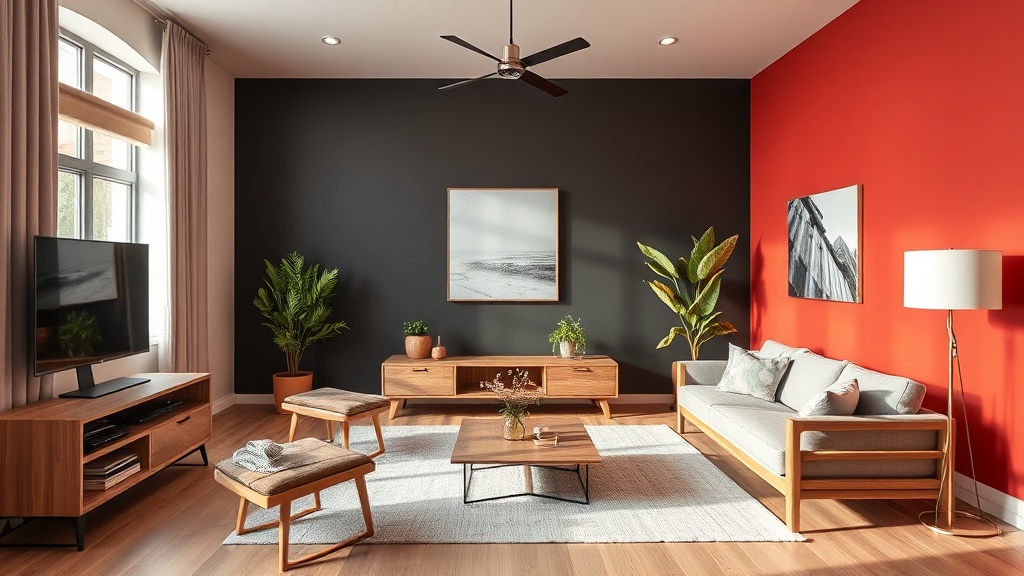
Rug Size Made Simple: Quick Guide for Any Room in Your Home

Rug Size Made Simple: Quick Guide for Any Room in Your Home
Ever stare at a rug that looks either swallowed by the floor or floating in mid‑air? You’re not alone. Most design mishaps start with a piece of fabric that doesn’t belong where you put it.
Why does rug size matter more than you think?
Beyond aesthetics, a correctly sized rug defines spatial zones, anchors furniture, and even tricks the eye into perceiving a room as larger or cozier. In my Curtain Math post I showed how a single measurement can make or break a window treatment; the same principle applies to floor coverings.
What’s the math? (Spoiler: it’s a handful of easy rules)
1. Leave a border of floor visible
For a balanced look, aim for 18–24 inches of bare floor around the rug. This rule of thumb works for most living rooms and dining areas. If you have a smaller space, lean toward the 18‑inch side; larger rooms can accommodate the full 24 inches.
2. Match the rug to your furniture layout
There are three common configurations:
- All‑four‑piece layout: The rug should sit under the front legs of all major pieces (sofa, chairs, coffee table). This usually means a rug that’s about half the room’s width plus a few feet.
- Two‑piece layout: Only the front legs of the sofa and chairs touch the rug. In this case, a rug that’s 8‑ft wide works for most 10‑ft × 12‑ft living rooms.
- Floating rug: The rug is centered with no furniture touching it—great for accent pieces. Keep the rug at least 2‑ft smaller than the room’s shortest dimension to avoid a “floating island” feel.
3. Use the “8‑foot rule” as a quick shortcut
If you’re in a hurry, grab an 8‑ft × 10‑ft rug for any room up to 12 ft wide. It’s the sweet spot that most manufacturers design for.
How do I translate those rules into a real‑world check?
- Measure the room’s length and width.
- Subtract 36–48 inches (18–24 inches each side) from the width to get the maximum rug width.
- Decide which furniture layout you’re using and apply the corresponding rule above.
- Round to the nearest standard rug size (5×7, 6×9, 8×10, 9×12, etc.).
Here’s a handy HGTV guide that lists the most common rug dimensions for quick reference.
What about shape?
Rectangular rooms almost always get a rectangular rug—simple and symmetrical. If you have a square room, a round rug can soften the geometry. For elongated spaces (like a hallway), a runner that’s 2‑3 ft wide and runs the length of the path works best.
Where can I source a quality rug without breaking the bank?
My go‑to list for high‑low sourcing:
- Wayfair — massive selection, frequent sales.
- IKEA — budget‑friendly, easy to replace.
- Pottery Barn — higher‑end, but you can snag clearance pieces that look premium.
Remember my Sofa Buying in 2026 spec audit? Apply the same scrutiny: check material durability, pile density, and return policy before you click “Add to Cart.”
If you’re reworking a living‑room layout, see my 24‑Hour Living Room Reset for a step‑by‑step rescue.
Takeaway: Your 5‑step rug‑size cheat sheet
- Measure room dimensions.
- Subtract 36–48 inches to find max rug width.
- Choose layout (all‑four, two‑piece, floating) and apply the matching rule.
- Round to a standard size and confirm the shape fits the room’s geometry.
- Source smart: blend a budget retailer with one premium piece for that high‑low mix.
Follow these steps and you’ll never again feel like your rug is a visual misstep. Your floor will finally have the grounding it deserves.