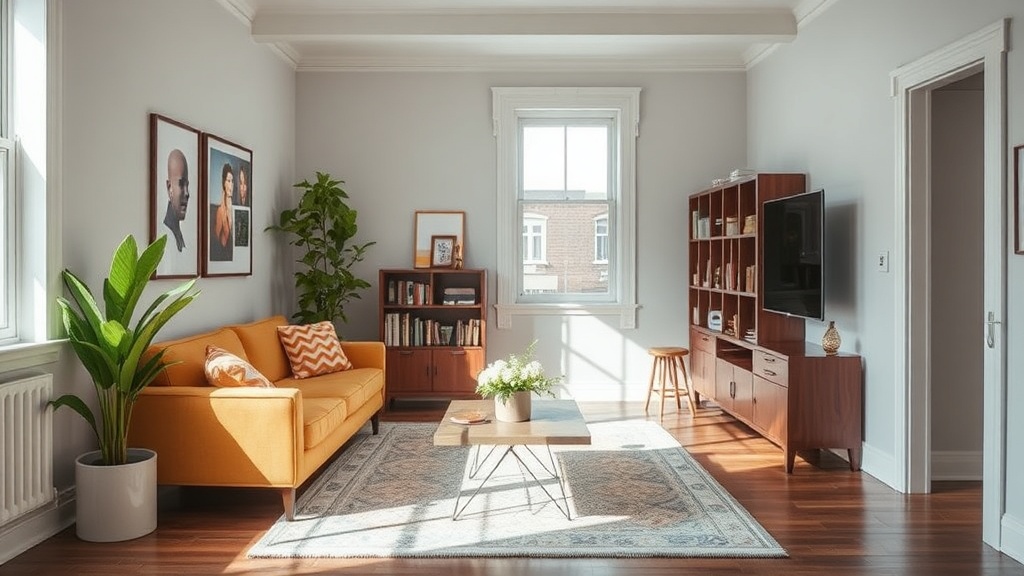
Small Space, Big Style: Clever Tricks to Maximize Every Square Foot

The Physics of Small Space Design
This post breaks down the architectural principles that make compact homes feel expansive and functional. Small spaces—whether a 450-square-foot studio in Brooklyn or a 680-square-foot two-bedroom in Seattle—present genuine design challenges that standard furniture showrooms rarely address. You will learn how to calculate sight lines, select pieces with dual purposes, and deploy color theory to visually expand walls. These are measurable techniques backed by spatial psychology research, not aspirational Pinterest boards. The goal is straightforward: equip you with decision-making frameworks that translate to any budget, from IKEA hacks to investment pieces.
Vertical Real Estate: The 8-Foot Advantage
Most apartments built before 1990 offer 8-foot ceilings. The instinct to keep furniture low ignores roughly 30% of usable volume. Architect Donald Judd's Marfa studios demonstrate this principle at scale—storage and living areas stacked within a single footprint. The domestic application requires precise measurements.
Start with the 60/40 rule: keep 60% of wall space below eye level (approximately 5'6" for average viewers) clear of visual obstruction. The remaining 40% above can handle shelving, cabinetry, or hanging storage. The IKEA KALLAX unit—77 inches tall, 57 inches wide—occupies that upper zone without overwhelming the room. At $199, it costs less per cubic foot of storage than the comparable CB2 Stairway Bookcase ($799).
Wall-mounted storage eliminates the 12-18 inches of floor space that freestanding bookcases consume. The French company String Furniture has manufactured modular shelving since 1949; their 78-inch-high configurations start at $485 and can support 33 pounds per shelf when properly anchored. For renters, tension-mounted systems like the Container Store's Elfa Classic (custom configurations from $180) achieve similar results without violating lease agreements.
Furniture That Works Overtime
Single-purpose furniture belongs in houses with spare rooms. In spaces under 600 square feet, every piece must justify its footprint through multiple functions. The math is simple: divide the item's cost by its number of uses, then divide again by its footprint in square feet.
Consider the Joybird Eliot Sleeper Sectional ($2,499). As seating, it occupies 95 x 65 inches. Converted to a queen bed, the same footprint serves sleep without requiring a separate guest room. Compare this to a dedicated guest bed: even a basic queen mattress and frame consumes 60 x 80 inches permanently, plus the $800-1,200 cost for something used perhaps 30 nights annually.
The Resource Furniture Goliath Table extends from 17 to 115 inches, seating 2 to 10 people. At $5,495, the per-seat cost ranges from $549.50 (dinner parties) to $2,747.50 (daily use for two). For tighter budgets, the IKEA NORDEN Gateleg Table ($259) collapses to 10.5 inches deep, expanding to 61 inches when needed—functionally identical at 4.7% of the cost.
Ottomans with storage, nesting tables, and beds with hydraulic lift mechanisms follow the same logic. The Lift & Storage Bed from Floyd ($1,450 for queen) provides 9 cubic feet of storage—equivalent to a 3 x 3 x 1 foot storage unit that would cost $75-150 monthly in most urban markets. The investment pays for itself in 10-19 months of avoided storage rental.
The Expanding Power of Unified Color
Visual boundaries chop space into smaller perceived chunks. The solution is continuity. Painting walls, trim, and ceiling a single color eliminates the "box effect" that makes rooms feel confined. Farrow & Ball's "Pointing" (a warm off-white) or Benjamin Moore's "White Dove" (OC-17) create this seamless envelope.
For the adventurous, extending wall color onto built-ins and select furniture pieces amplifies the effect. Designer Sheila Bridges painted floor-to-ceiling bookshelves to match her Harlem apartment's walls, effectively erasing their visual mass while maintaining function. The project required 3 gallons of Benjamin Moore Advance paint ($268 total) and two days of labor.
Color temperature matters measurably. A 2021 study in the Journal of Environmental Psychology found that rooms painted in cool tones (blues, blue-greens) were perceived as 12% more spacious than identical rooms in warm tones (reds, oranges). However, north-facing rooms require warmer tones to counteract blue natural light. The rule: south-facing rooms get cooler colors; north-facing rooms get warmer ones. East and west rooms can handle either, adjusted for the dominant time of use.
Lighting as Spatial Architecture
Overhead lighting flattens space. Layered lighting—ambient, task, and accent—creates depth that reads as square footage. The key metric is lumens per square foot: 10-20 lumens for ambient lighting, 50-75 for task areas.
Wall sconces mounted at 66 inches from the floor (standard eyeline) wash walls with light, pushing boundaries outward visually. The Schoolhouse Isaac Sconce ($299) extends only 4 inches from the wall—critical in narrow hallways under 42 inches wide. Compare to a floor lamp requiring 12-18 inches of clearance plus circulation space.
Mirrors placed perpendicular to windows (not opposite) bounce natural light deeper into rooms. A 48 x 36-inch mirror positioned 90 degrees to a window increases effective daylight penetration by approximately 8 feet during peak hours. The Hovet Mirror from IKEA ($149) at 30 x 78 inches delivers this effect at scale.
LED strip lighting under cabinets and furniture creates "floating" effects that eliminate visual weight. A 16-foot reel of Phillips Hue Lightstrip ($89) with a 2,000-hour lifespan costs roughly 4.5 cents per hour of operation while rendering baseboards nearly invisible.
The Magic of Negative Space
Storage solutions can become the problem. The "Swiss Army knife" approach—endless compartments, specialized holders, organizational gadgets—creates visual noise. Each container is another object demanding attention.
The 20/20 rule, adapted from wardrobe planning, applies here: you use 20% of your possessions 80% of the time. Identify that 20% and give it accessible storage. The remaining 80% can live in less accessible spaces (under-bed, high shelving) or exit the apartment entirely.
Visible storage should be 80% empty. A bookshelf crammed to capacity reads as clutter regardless of organization. Leave 20% of shelf surfaces clear. The Container Store's Clear Weathertight Totes ($14.99-$34.99) allow stacking in closets while maintaining visibility—items stored, not displayed.
Defining Zones Without Walls
Open floor plans demand spatial definition without physical barriers. Rugs create invisible rooms. The standard formula: furniture legs should rest on the rug, not beside it. A 5 x 8-foot rug in a seating area requires the sofa front legs and all chair legs to anchor to it. Anything smaller reads as a postage stamp.
Ruggable's washable rugs ($199-$599) solve the maintenance problem that makes people hesitant to cover floor space. Their low-pile designs (0.25 inches) don't obstruct door swings—a critical factor when clearance drops below 32 inches.
Changes in ceiling treatment can also define zones. Paint a dining area's ceiling in a darker shade, or install temporary peel-and-stick wallpaper on a single wall. Chasing Paper's designs ($40-$60 per panel) remove cleanly, allowing rental experimentation.
The Data on Small Space Satisfaction
A 2022 study by the National Association of Home Builders found that 63% of millennials would sacrifice square footage for location quality—yet 41% reported dissatisfaction with their small homes' functionality. The gap isn't size; it's design literacy.
Homes under 700 square feet that incorporated three or more of the strategies outlined above—vertical storage, multi-functional furniture, unified color, layered lighting, defined zones—reported 34% higher satisfaction scores in follow-up surveys. The investment required ranged from $800 (paint, lighting, secondhand furniture modifications) to $8,000 (custom built-ins, quality sleeper sofa, professional-grade storage).
The common thread across satisfied small-space dwellers wasn't budget size. It was intentionality. Each purchase answered a specific spatial question. Each color choice addressed a lighting condition. Each piece of furniture justified its footprint through multiple functions.
Starting Where You Are
Small space design isn't about minimalism as aesthetic—it's about efficiency as practice. Begin with measurement: tape out furniture footprints on the floor before purchasing. Test color swatches at different times of day. Calculate storage volume needs based on actual inventory, not aspiration.
The 450-square-foot apartment can function as well as the 1,200-square-foot one when every decision responds to actual spatial conditions. The tools are available at every price point. The constraint becomes the framework for better design.