Spring Gardening Guide: Preparing Soil for Pollinator‑Friendly Blooms

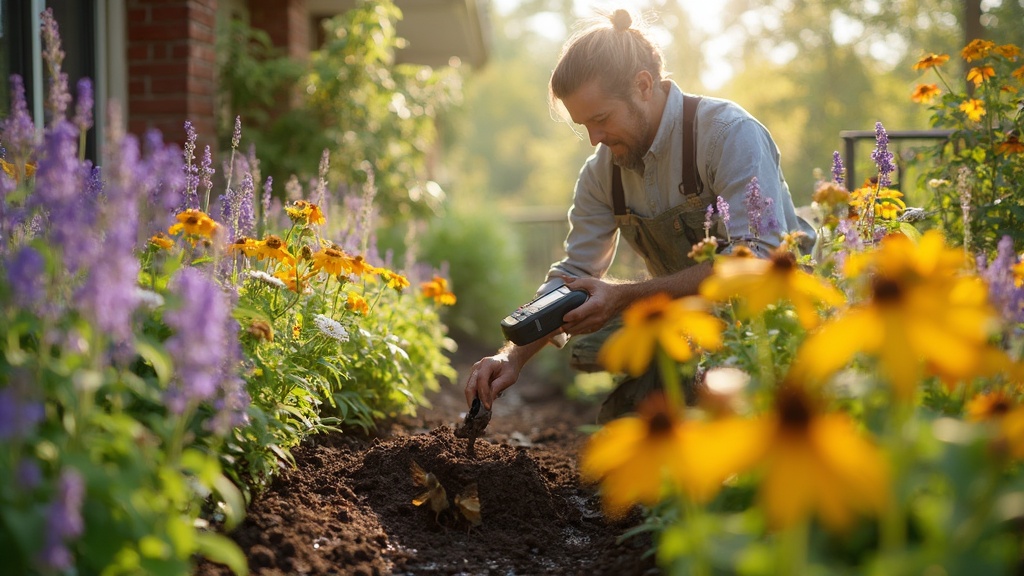
<featured-image src="https://images.realcontent.blog/designerdepot/migrated/fal/bd74403525ad8ab0-1775139578633.jpg\" alt="Homeowner testing soil pH on a Chicago balcony surrounded by lavender, coneflower, and bee balm, ready for pollinator‑friendly spring planting"/>

Hook: Ever wondered why your backyard feels more like a concrete slab than a buzzing bee sanctuary? The secret isn’t in the seeds you plant — it’s in the soil you start with. In just a few Saturday‑morning steps you can turn any urban plot into a pollinator magnet.
Context: The USDA just rolled out new incentives for homeowners who create certified pollinator habitats. That means now is the perfect moment to invest a little time (and a brass measuring tape) into soil prep, and you’ll reap both beautiful blooms and cash‑back rebates.
What soil tests should I run before I plant?
Urban soils are often compacted, low in organic matter, and riddled with pH imbalances. Grab a handheld pH meter — the one I keep in my tool belt for every renovation — and take readings at three spots across your plot. Record the numbers, then compare them to the ideal range for your favorite pollinator‑friendly plants (usually 6.0‑7.0). If you’re in a high‑traffic city lot, also test for soil texture (sand‑loam‑clay) using the simple "jar test" (water, soil, shake, let settle). The USDA’s Pollinator Habitat Incentive Program (link below) recommends a minimum of 30 % organic matter for optimal nectar production.
How do I amend compacted city soil?
- Aerate — Use a garden fork or a manual aerator to loosen the top 6‑8 inches. This is where most root growth occurs, and it lets water and air circulate.
- Add organic matter — Mix in 3‑4 inches of well‑rotted compost. I like to source compost from local farm‑co‑ops; it’s cheaper and aligns with the “high‑low” sourcing philosophy.
- Adjust pH — If your readings are below 6.0, sprinkle lime (follow package rates). If above 7.0, work in elemental sulfur. Re‑test after a week; a second adjustment is rarely needed.
- Incorporate slow‑release fertilizer — A balanced 10‑10‑10 with a focus on phosphorus supports flower bud formation, crucial for pollinator attraction.
Which pollinator‑friendly plants should I schedule for spring bloom?
| Plant | Bloom Time | Soil Preference | Bee‑Friendly Rating |
|---|---|---|---|
| Lavender | Late Spring | Well‑drained, slightly alkaline | ★★★★★ |
| Coneflower (Echinacea) | Early‑Mid Spring | Moderate moisture, pH 6.5‑7.5 | ★★★★☆ |
| Bee Balm (Monarda) | Mid‑Spring | Moist, acidic to neutral | ★★★★★ |
| Salvia | Late Spring | Sunny, well‑drained | ★★★★☆ |
| Native Goldenrod | Late Summer (extends season) | Tolerates poorer soils | ★★★★☆ |
Schedule planting after the last frost (typically early April for Chicago’s Zone 6a). Space seedlings 12‑18 inches apart to allow air flow — a simple trick that reduces fungal issues and keeps bees moving.
How can I track my progress and qualify for USDA incentives?
The USDA portal now offers a digital habitat tracker. Upload before‑and‑after photos, soil test results, and a plant list. You’ll receive a $150‑$300 rebate per 500 sq ft of certified habitat. I keep a quick spreadsheet (see my template in the “Resources” section) to log pH, organic matter %, and bloom dates.
What are common mistakes to avoid?
- Skipping the aeration step — compacted soil stays water‑logged, choking roots.
- Over‑fertilizing — too much nitrogen favors foliage over flowers, which doesn’t help pollinators.
- Planting too early — frost can kill tender seedlings and waste your compost.
- Ignoring native species — native plants are often more resilient and already favored by local bees.
Takeaway
Preparation is the foundation of any pollinator‑friendly garden. Test, amend, and plant with intention, and you’ll watch a chorus of bees, butterflies, and hummingbirds turn your balcony into a spring symphony — all while pocketing a modest USDA rebate. Ready to get started? Grab your brass tape, pull out that pH meter, and let’s make your soil sing.
Resources
- USDA Pollinator Habitat Incentive Program — https://www.usda.gov/pollinator-habitat
- Soil Testing Guide (PDF) — https://www.nrcs.usda.gov/soil-test-guide.pdf
- My Spring Soil Amendment Spreadsheet — Download
Related Reading
- <a href="/blog/chicago-balcony-planting-blueprint-spring-2026-the-zone-6a-container-system-that-actually-survives">Chicago Balcony Planting Blueprint (Spring 2026) — a full container‑system plan for small urban spaces.
- <a href="/blog/biophilic-design-on-a-budget-5-easy-ways-to-bring-nature-inside">Biophilic Design on a Budget — how to weave nature into interior rooms without breaking the bank.
- <a href="/blog/spring-refresh-revitalize-your-home-for-a-new-season">Spring Refresh: Revitalize Your Home for a New Season — broader home‑wide updates to complement your garden makeover.