The 24-Hour Living Room Reset: A Real 10x12 Layout Rescue (With Exact Measurements)

The 24-Hour Living Room Reset: A Real 10x12 Layout Rescue (With Exact Measurements)
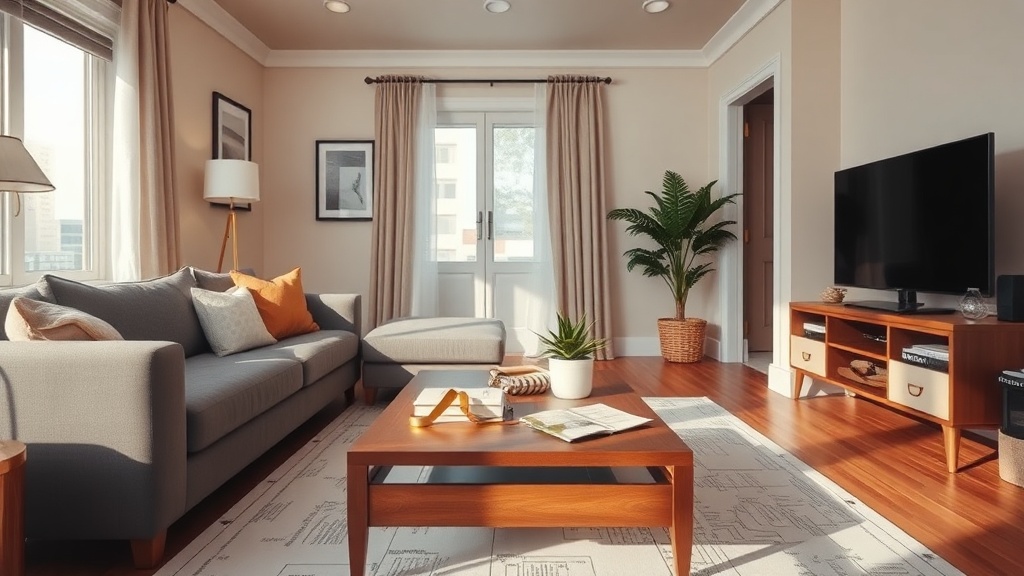
Most living rooms are not “bad taste.” They are traffic jams with throw pillows.
This morning’s inbox had a classic: "Sloane, my living room is 10x12, my sofa is 90 inches, and everything feels cramped. Do I need new furniture?"
Short answer: probably not. Long answer: you need a layout correction before you open your wallet.
I am going to show you the exact reset I use for a small rental living room in one day, using dimensions that keep your knees, eyes, and pathways functional. No influencer fluff. Just spatial triage.
The Room We’re Fixing
- Room size: 10' x 12' (120" x 144")
- Entry door swings into one corner
- One window centered on the long wall
- Existing sofa: 90" wide x 38" deep
- Existing coffee table: 48" x 24"
- Existing rug: 5' x 7'
- Existing TV stand: 60" wide x 16" deep
Why it feels wrong right now:
- The 5' x 7' rug is too small, so every piece looks like it’s floating and arguing.
- The 48" coffee table is oversized for a 90" sofa in this footprint.
- The room has no clear circulation path, so movement cuts through the seating zone.
The Non-Negotiable Measurements
Tape these to your forehead if needed.
- Main walkway: 30" to 36" clear.
- Sofa-to-coffee-table distance: 16" to 18".
- Coffee table length: about 2/3 of sofa length.
- Rug rule: front legs of sofa and chairs on the rug, always.
- TV viewing baseline: center of screen close to seated eye level.
Design is not vibes. It is controlled spacing.
The 24-Hour Reset Plan
Hour 1: Strip and Measure
Pull everything out except the largest pieces (sofa, TV stand).
Measure and write down:
- Every wall length
- Door swing arc
- Window casing width
- Exact furniture dimensions (not listing dimensions)
Mark painter’s tape lines on the floor for a dedicated circulation lane from entry to main destination (usually sofa or hallway). Target 32" clear.
If your current layout forces people through the coffee-table zone, the plan is already wrong.
Hour 2-3: Reposition the Anchor Pieces
In this room, the best anchor move is usually:
- Sofa on the long wall opposite the window
- TV stand on short wall directly facing sofa
- Keep one uninterrupted circulation lane along the window side
Why this works: you separate movement from lounging. When traffic and seating occupy the same strip, the room feels smaller than it is.
Hour 4: Fix Scale (The Cheap, High-Impact Move)
Replace the 5' x 7' rug with an 8' x 10'.
In a 10x12 room, an 8' x 10' gives you enough field for:
- Sofa front legs fully on rug
- One accent chair front legs on rug
- Coffee table fully on rug
The room immediately reads as one composition instead of loose objects at war.
Hour 5: Coffee Table Correction
For a 90" sofa, target coffee table length around 54" to 60" maximum if the room allows, but small-room depth is the true limiter.
In this specific 10x12 setup, I prefer:
- 36" to 42" long
- 20" to 24" deep
- Rounded corners if circulation is tight
Then set the table 17" from the sofa edge and verify you still keep the circulation lane.
Yes, this often means downsizing the coffee table, even when the internet says bigger is "more elevated." Elevation is being able to walk through your own apartment without shin injuries.
Hour 6-7: Lighting Rebalance
One overhead fixture is not a lighting plan.
Use a three-point setup:
- Ambient: existing overhead on dimmer or warmer bulb
- Task: reading lamp at sofa arm
- Accent: small table lamp opposite side to even contrast
Quick spec pass:
- 2700K to 3000K for living spaces
- CRI 90+ when possible
- Replaceable bulbs only (no integrated LED dead-ends)
If I can’t swap the bulb in two years, it doesn’t enter my sourcing list.
Hour 8: Textile and Visual Weight Edit
This is where most people over-decorate.
Keep the textile stack to three layers max:
- One grounding rug
- Two to four pillows in related tones
- One throw with visible texture shift (not same-fabric duplication)
Add one vertical element (floor lamp or tall plant) in the corner diagonal from the entry. That balances sightlines and prevents the "all furniture at knee height" pancake effect.
Hour 9: Wall and Art Placement
Hang art to support furniture geometry, not to fill blank drywall.
Rules I use:
- Art center ~57" to 60" from floor (adjust for ceiling and furniture)
- Over sofa: artwork grouping should span about 60% to 75% of sofa width
- Leave 6" to 10" between sofa top and lowest frame edge
If your artwork is tiny, cluster with intention. One undersized frame floating above a large sofa makes the whole room look accidental.
Hour 10: The High-Low Spending Pass
Do not spend evenly. Spend where failure is expensive.
Splurge:
- Rug size (not necessarily luxury fiber, but correct footprint)
- One truly comfortable reading lamp with replaceable bulb
Save:
- Side table (vintage or basic powder-coated steel)
- Decorative pillows (covers only, upgraded inserts later)
- Accent objects (thrifted ceramics beat mass-produced "artisan" props)
Budget reality for this reset:
- Rug: $180 to $450
- Smaller coffee table: $120 to $300
- Two lamps + bulbs: $140 to $320
- Pillow covers/throw: $60 to $150
Total typical range: $500 to $1,200.
That is dramatically cheaper than replacing a perfectly usable sofa because the layout was wrong.
The 5-Minute Final Audit
Before you call it done, run this:
- Can two people pass through the room without turning sideways?
- Can you reach the coffee table without leaning like a plank?
- Do at least the front legs of every seat touch the rug?
- Is there light at eye level when overhead is off?
- Does anything in the room exist only because "that’s where it usually goes"?
If you fail #5, edit again.
The Point
Good rooms are not about buying "designer" pieces. They are about measurable relationships: distance, scale, circulation, and light.
You can absolutely keep your existing furniture and still get a room that feels custom. But you have to stop decorating and start planning.
That is the whole game.