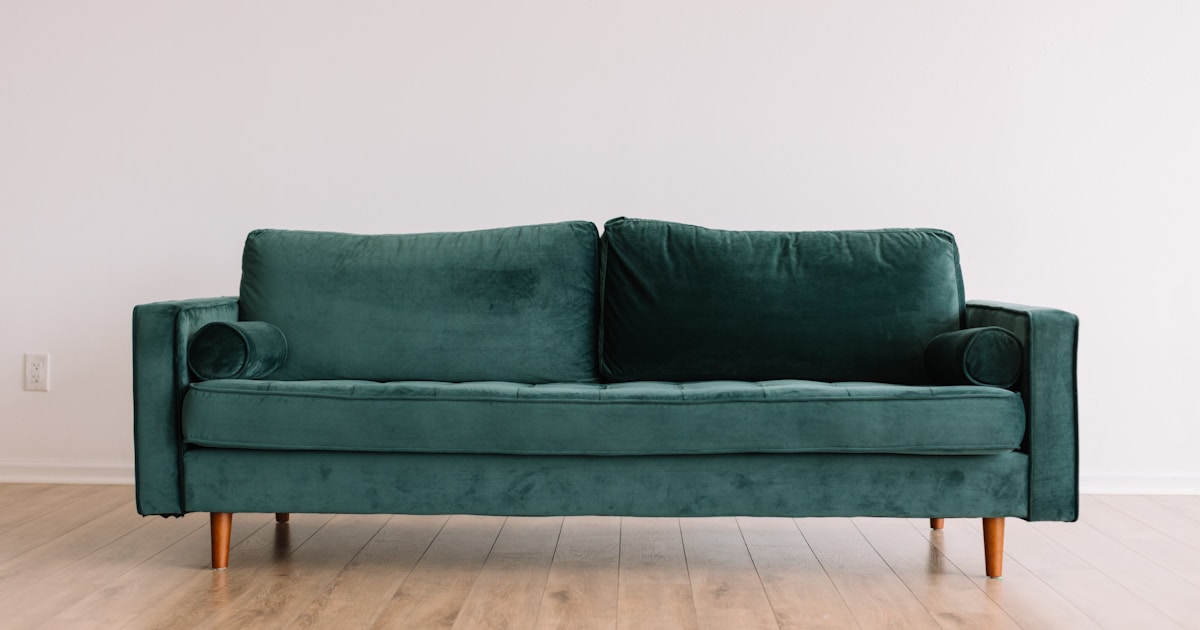
The Anatomy of 2026's Velvet Surge: Why Dramatic Upholstery Is Suddenly Everywhere (And What It Means for Your Budget)

Let's look under the hood of this trend.
Velvet is having a moment. Not the "subtle accent chair" moment of 2023. We're talking full-room drenching—sofas, ottomans, even headboards in jewel tones and sculptural silhouettes. Martha Stewart is calling it. Elle Decor is calling it. A hundred designers surveyed by Country Living agree: velvet and organic curves are the defining furniture trends of 2026.
But here's what the trend forecasters aren't telling you: This surge isn't aesthetic. It's economic.
The Manufacturing Pressure That's Reshaping Your Options
For the last three years, flat-pack minimalism dominated because it was cheap to manufacture and ship. Modular sectionals, low-profile frames, neutral linen—these required minimal skilled labor and fit neatly into container logistics.
Then tariffs hit. Then shipping costs stabilized at a new (higher) baseline. And suddenly, the economics of furniture production inverted.
Here's the math:
- A flat-pack sectional in beige linen: Requires 14 separate components, 8 assembly steps, 3 different material suppliers. Tariff exposure = HIGH. Shipping cost per unit = $340. Retail price pressure = downward.
- A sculptural velvet sofa (single-piece frame): Requires 2 components (frame + upholstery), 1 assembly step, 1 primary supplier. Tariff exposure = LOWER. Shipping cost per unit = $280. Retail price pressure = stable or upward.
Manufacturers are pivoting to fewer, more sculptural pieces because they're easier to produce, ship, and protect from tariff volatility. Velvet became the trend because it's a high-margin material that justifies the production overhead of a custom-built frame.
Translation: The trend isn't just aesthetic. It's a structural response to manufacturing constraints.
Why This Matters for Your Sourcing Strategy
If you understand the why, you can navigate the where and the when.
The High-Margin Play (The Splurge):
Sculptural velvet pieces from mid-market manufacturers who own their production (e.g., Article, Maiden Home, Blu Dot) are experiencing genuine supply stability right now. These brands are banking on the tariff-driven shift toward single-piece construction. If you're going to invest $2,200 in a sofa, this is the moment—lead times are 8-12 weeks (reasonable), and the design language is tight.
The Inventory Liquidation Play (The Save):
Flat-pack minimalism is being clearanced. Hard. West Elm, CB2, and Wayfair are aggressively marking down modular sectionals and low-profile frames because they're stuck holding inventory in a market that's shifted. You can find 40-50% discounts on pieces that are structurally sound but aesthetically "out of cycle."
The trick? These pieces are perfect as a base layer for the high-low mix. A $600 discounted sectional (down from $1,200) paired with a $400 vintage velvet throw and a $200 unlacquered brass floor lamp creates the visual language of "sculptural luxury" without the $2,200 price tag.
The Textile Specification You Need to Know
Not all velvet is created equal. And right now, manufacturers are cutting corners on pile weight because they know you're looking at the color, not the durability.
GSM (grams per square meter) matters. (For the nerds in the back: this is the metric that determines how long your velvet will hold its shape and resist pilling.)
- Budget velvet: 250-350 GSM. Will look tired in 18 months. Expect pilling on high-traffic areas.
- Mid-range velvet: 400-500 GSM. Will hold for 4-5 years with regular brushing. This is the sweet spot for most residential use.
- High-performance velvet: 600+ GSM. Will last 7+ years and resist pilling. Unlacquered brass hardware on this piece = investment.
When you're sourcing, ask for the GSM. If they don't know it, walk. (Maiden Home and Article publish theirs publicly—that's a signal.)
The Organic Curve Trap (And How to Avoid It)
Sculptural, curved furniture is trending because it's structurally interesting and easier to manufacture in single pieces. But here's the danger: curved frames are harder to arrange in rooms with traditional architecture.
A sculptural 84" curved sofa looks stunning in a open-plan loft. It looks cramped in a 12' x 14' living room with a fireplace wall.
The Rule of Thirds applies here: Your sofa should occupy roughly one-third of your wall length. If your room is 14' wide, you want a 4.5-5' sofa. If the trend is pushing 7-8' curved pieces, you're fighting geometry.
Measure twice. Source once.
Where to Actually Buy This Trend (Without Getting Trapped)
The Verified High-Low Stack:
- Sculptural Frame (The Splurge): Maiden Home — Custom velvet options, 400-500 GSM standard, 10-week lead time, $1,800-$2,400. (They disclose GSM; that's non-negotiable.)
- Clearance Base (The Save): West Elm Clearance — Filter by "Sectional" and sort by "Price: Low to High." You'll find $600-$900 pieces that were $1,200+. Check the return policy (30 days); if it doesn't work, you're not trapped.
- Vintage Velvet Throw (The Texture Layer): 1stDibs or your local estate sale circuit. A 1970s mohair velvet throw ($80-$200) adds the tactile weight that makes a budget sofa look intentional.
- Brass Hardware (The Finish): Rejuvenation or Anthropologie — Unlacquered brass floor lamps ($300-$500) age with dignity and tie the whole vignette together.
The Pro Tip (Whispered)
If you're buying velvet right now, buy jewel tones, not neutrals. Here's why: The tariff pressure is pushing manufacturers toward bold colors because they're harder to discount. A emerald or sapphire velvet sofa will hold its value better than a "greige" one because there's less inventory competition. Plus, jewel tones are easier to style—they create instant visual weight without requiring a perfectly curated room.
And if you find a 500+ GSM velvet piece in a jewel tone at 40% off? That's not a trend. That's a structural arbitrage. Buy it.
The Anatomy Unlocked: The velvet surge isn't just a design cycle. It's a manufacturing response to tariff pressure and shipping economics. Understanding the why means you can source smarter, time your purchases better, and avoid getting trapped in trend-chasing without substance.
The high-low mix isn't just about mixing price points. It's about understanding the economic forces that make certain materials more available (and more valuable) at specific moments.
Let's look under the hood of your room next.