The Anatomy of a Living Room That Actually Works (Scale, Lighting, and the Fifth Wall Explained)

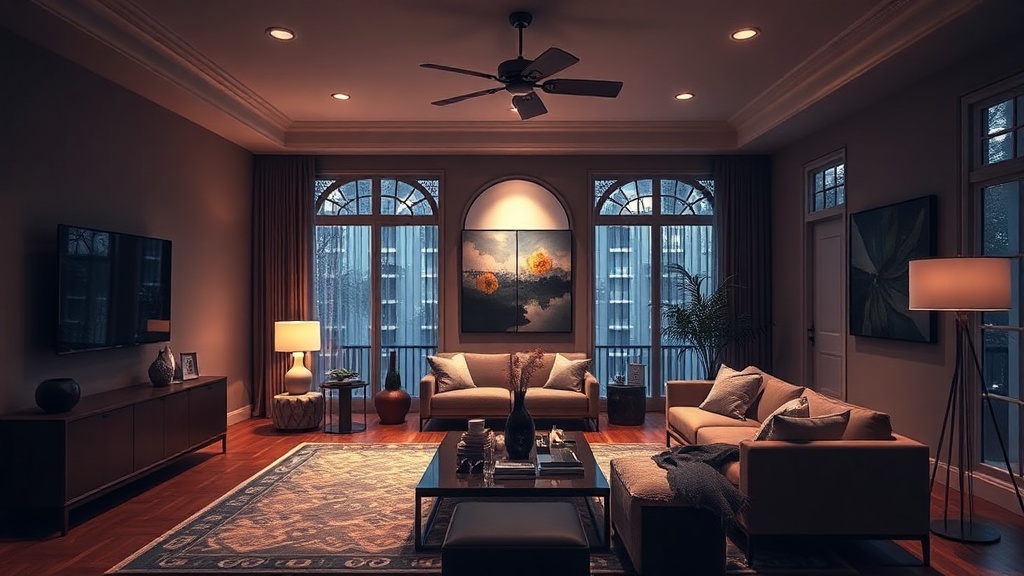
Let’s look under the hood of the most misunderstood room in your home: the living room. Not the Pinterest version. Not the catalog set with four identical throw pillows and a coffee table that has never seen a cup of coffee. I’m talking about a room that actually functions—where scale is correct, lighting has intention, and the so-called "fifth wall" isn’t treated like an afterthought.
If your living room feels "off," it’s not because you need a new sofa. It’s because one (or all) of these systems is broken. Today, we’re going to fix it—structurally.
Section 1: Scale Is the Skeleton (And Yours Might Be Broken)
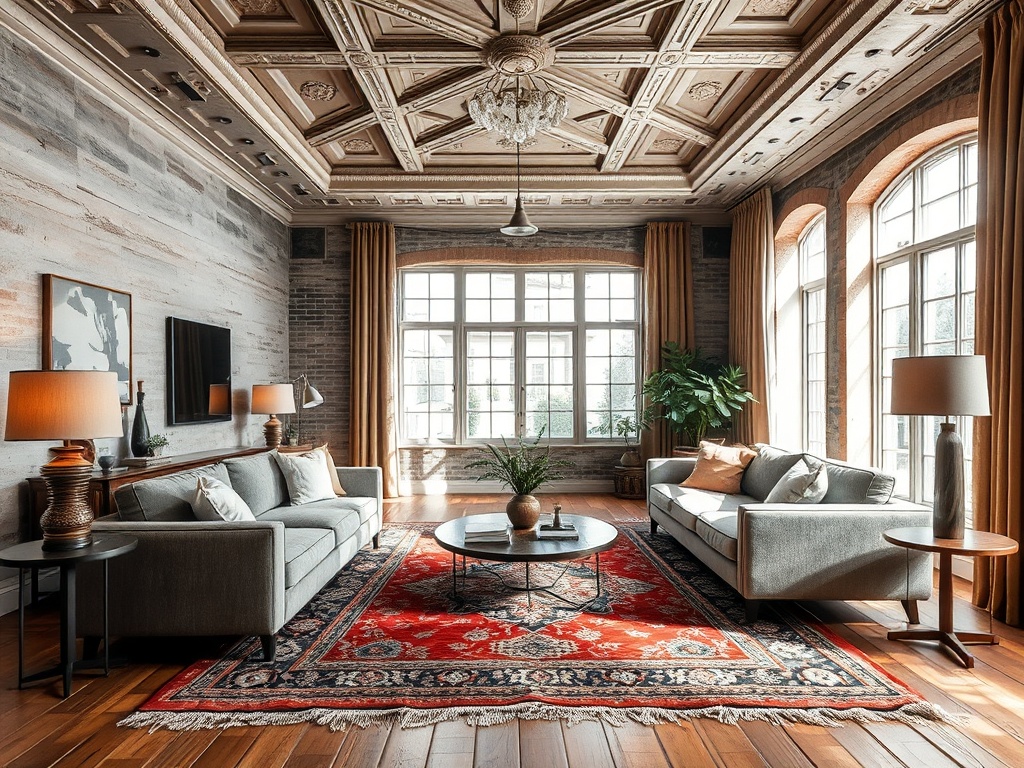
Here’s the uncomfortable truth: most living rooms fail at the skeletal level. Scale is not a vibe—it’s math. And if your rug is too small, your entire room collapses visually.
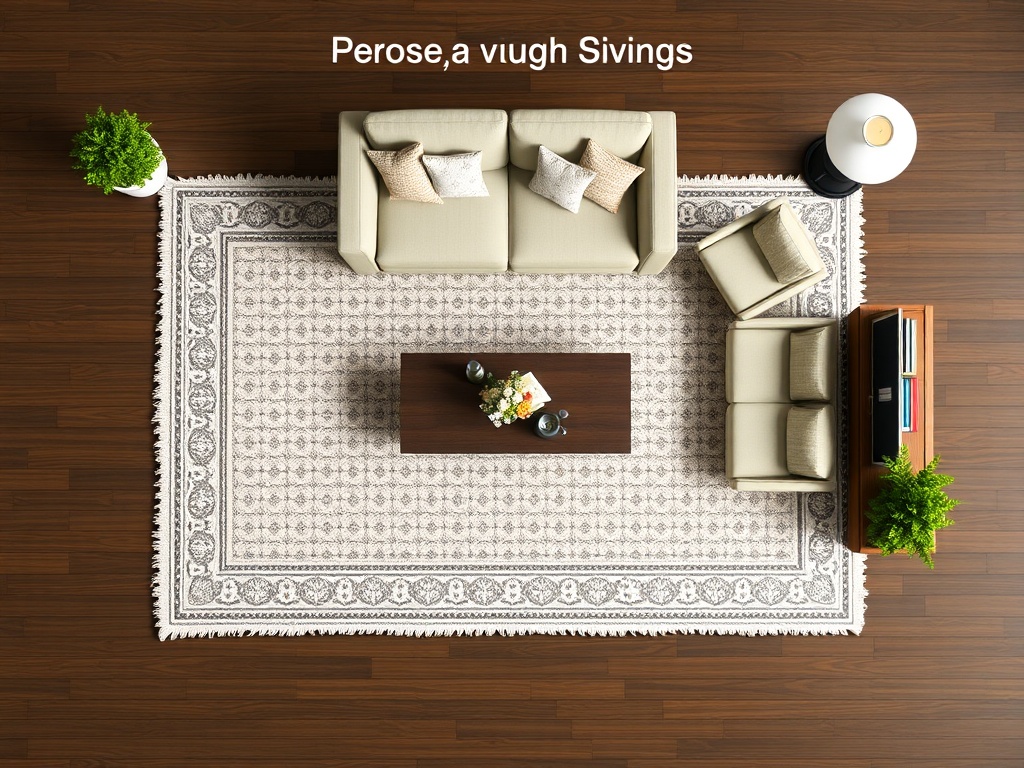
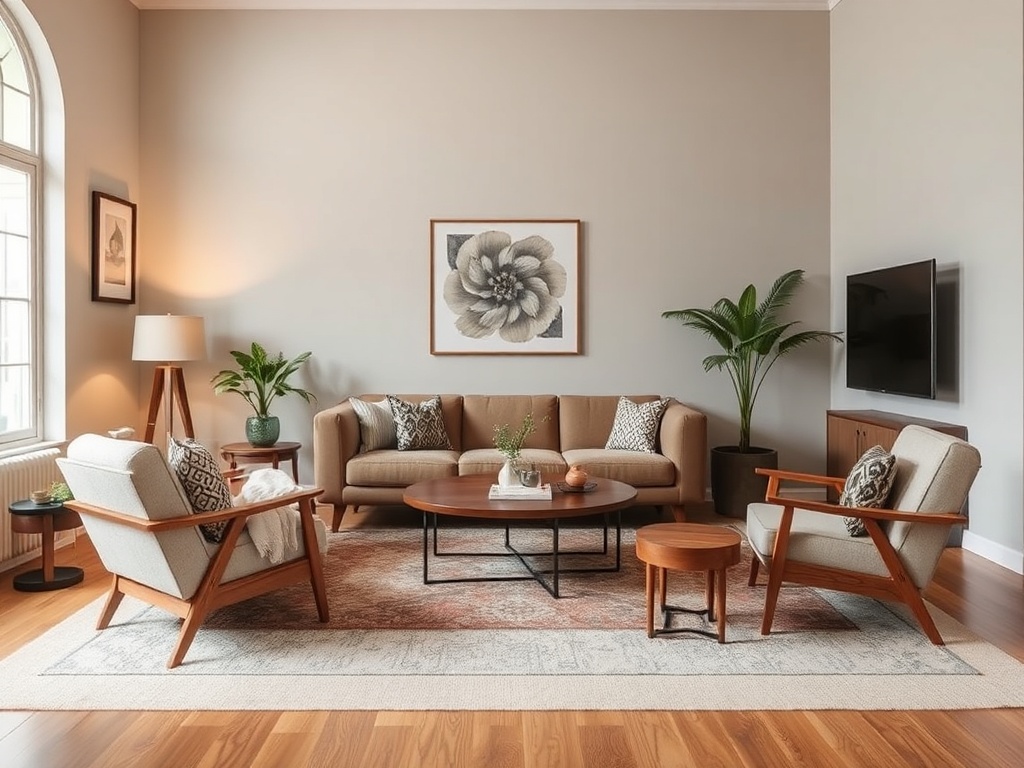
Let’s be precise. Your rug should anchor all major furniture pieces. Not "kiss the front legs"—that’s a compromise people make when they’re afraid of committing. I want at least the front legs of every seating piece on the rug, ideally all four. (Yes, even in small spaces. Especially in small spaces.)
The common failure: a 5x7 rug floating under a coffee table like a lonely island.
The correction: size up to an 8x10 or 9x12 depending on your room dimensions. Your furniture should feel like it’s in conversation, not socially distancing.
Now, let’s talk about seating depth and proportion. That low-profile modular sofa you bought because it looked good online? If it’s under 35" deep, it’s likely reading as "temporary." Depth creates visual weight. Pair that with a chair that has a different silhouette (no matching sets—we’re not furnishing a hotel lobby), and you create tension. That’s the goal.
(For the nerds in the back: ideal seat height is 17–19 inches, and your coffee table should land within 1–2 inches of that.)
Section 2: Lighting Is the Nervous System
If scale is the skeleton, lighting is the nervous system. And most rooms are running on a single overhead fixture like it’s 1997.
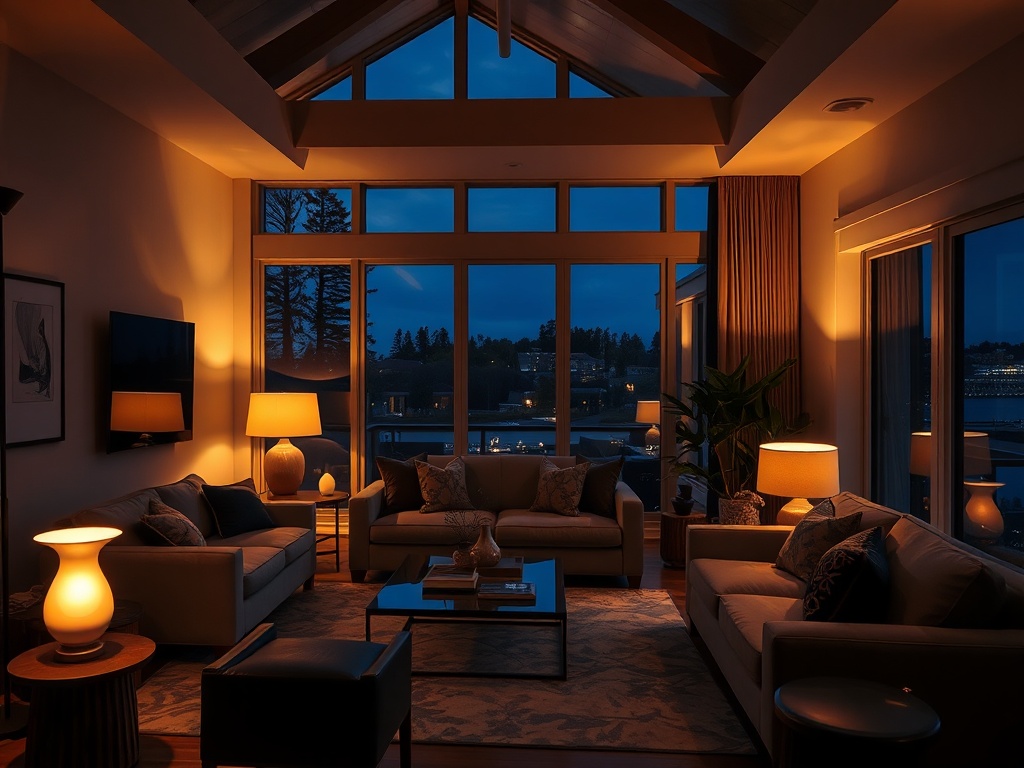
We layer light. Always. Ambient, task, and accent. Anything less and your room will feel flat, no matter how expensive the furniture is.
Ambient: This is your general illumination. Ideally not from a single overhead source. If you have recessed lighting, fine—but space them correctly (roughly 4–6 feet apart depending on ceiling height).
Task: Reading lamps, floor lamps, table lamps. These create usable zones. If you can’t read a book comfortably in your living room, what exactly is the room doing?
Accent: This is where things get interesting. Picture lights, wall sconces, or even a well-placed table lamp highlighting texture.
And for the love of everything structural: stop buying fixtures with integrated LEDs. If the bulb dies, the fixture dies. That’s not design—it’s planned obsolescence disguised as minimalism.
Kelvin matters. You want warmth. 2700K is your baseline. Anything above 3000K and your living room starts to feel like a surgical suite.
Section 3: The Fifth Wall (Your Ceiling Is Not Innocent)
Most people ignore the ceiling. I consider that a design failure.
The ceiling is the largest uninterrupted surface in your living room. Leaving it builder-grade white is like wearing a tailored suit with plastic shoes.
This doesn’t mean you need frescoes. It means intention.
- A soft tint (think diluted gray, pale blue, or even a warm off-white) can lower visual height and create intimacy.
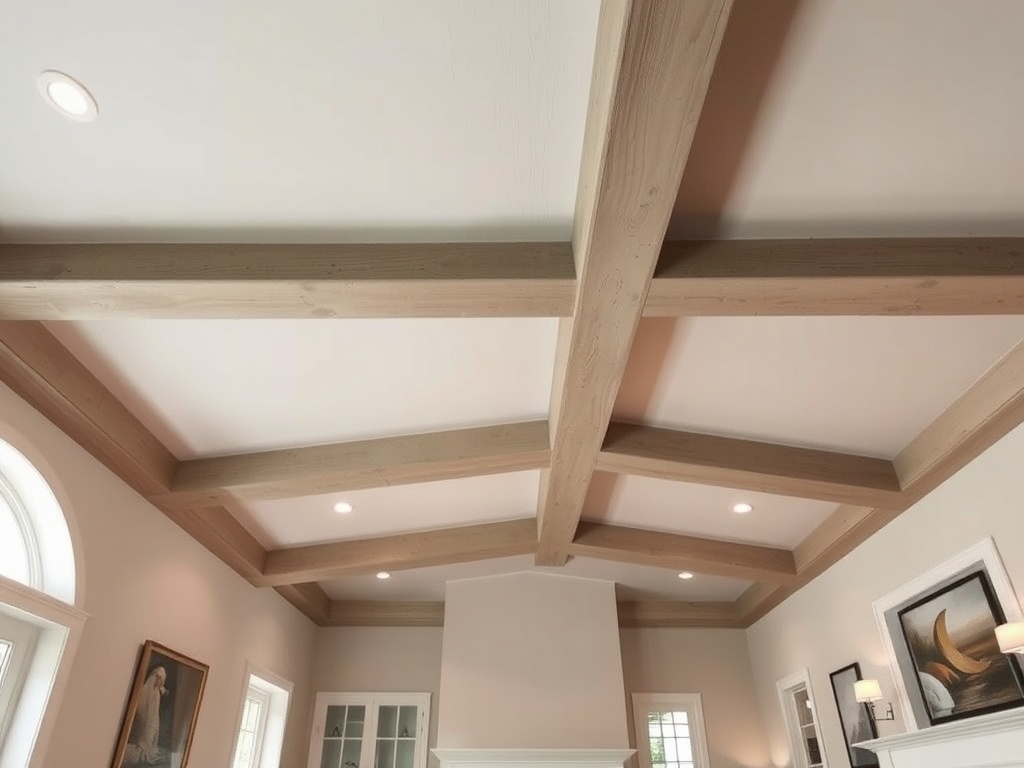
- Wood beams introduce rhythm and shadow.
- A subtle wallpaper adds texture without overwhelming the room.
Here’s the architectural trick: when your walls and ceiling share a tonal relationship, the room reads as cohesive rather than segmented. It’s the difference between a box and a volume.
Section 4: The High-Low Mix (Where You Actually Spend Your Money)
You do not need a $10,000 sofa. You need a well-constructed sofa (kiln-dried hardwood frame, eight-way hand-tied springs if you can find it—or at least sinuous springs done well) and then you need to stop spending like a tourist.
The Splurge:
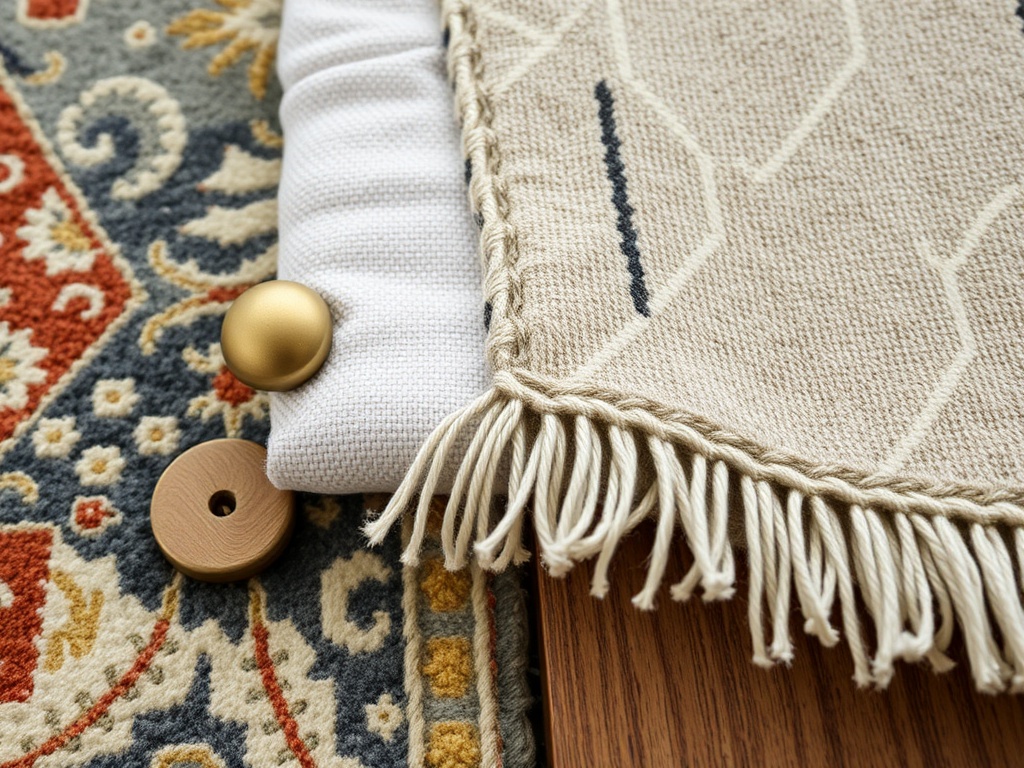
- Rug (preferably vintage or high GSM wool—this is where tactile quality lives)
- Primary seating frame (structure matters more than fabric)
- Hardware (unlacquered brass ages with dignity—yes, it will patina, that’s the point)
The Save:
- Side tables (vintage, secondhand, or even reworked pieces)
- Textiles (mix high and low—linen with something imperfect)
- Lighting bases (invest in good wiring, not brand names)
The goal is tension. A room where everything is expensive reads as flat. A room where everything is cheap reads as temporary. The magic is in the contrast.
Section 5: Layout Is a Conversation, Not a Lineup
Stop pushing all your furniture against the walls. You’re not hosting a middle school dance.
A functional living room has a center of gravity. Usually, that’s your coffee table or a focal point like a fireplace. Your seating should orbit that center, not cling to the perimeter.
Float your sofa. Pull your chairs in. Create zones if your space allows it. Even a small apartment can handle a "conversation zone" if you scale correctly.
And please—leave breathing room. 16–18 inches between seating and table edges is your sweet spot for movement without awkward shuffling.
Section 6: Texture Is the Soul (Flat Rooms Feel Dead)
If your room feels lifeless, it’s not a color problem—it’s a texture problem.
Flat rooms are usually built from the same three materials: smooth wood, synthetic fabric, and matte paint. That’s a recipe for visual boredom.
We layer:
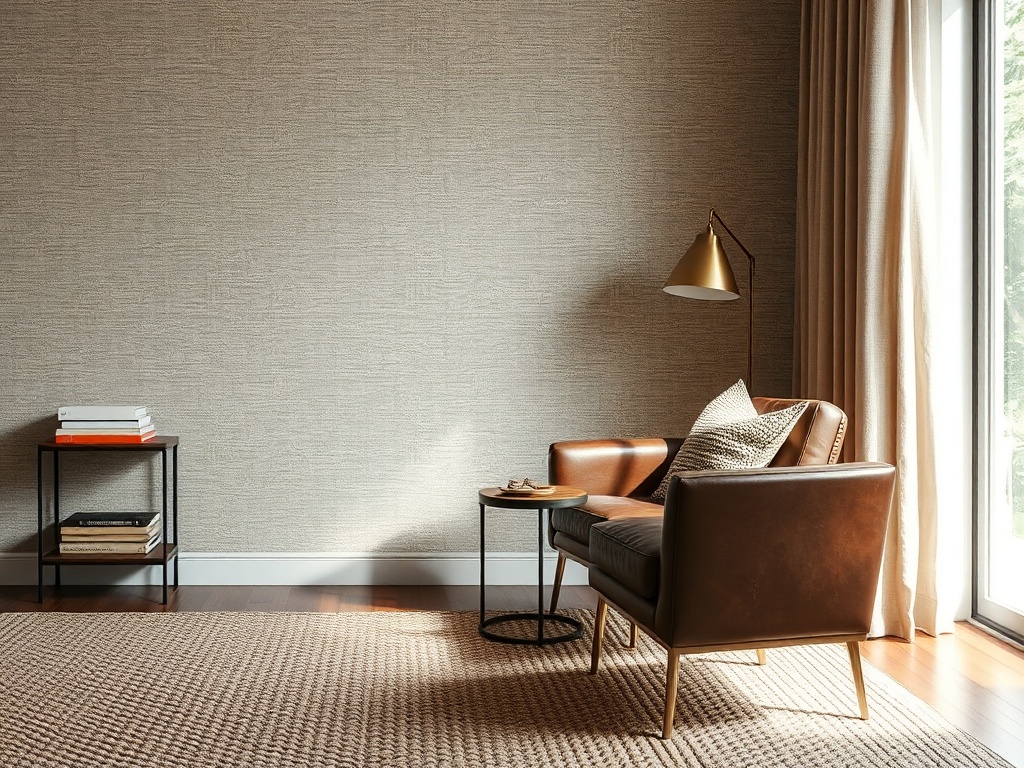
- Rough with smooth (bouclé against polished wood)
- Soft with structured (linen against leather)
- Matte with reflective (plaster against brass)
Texture creates shadow. Shadow creates depth. Depth creates interest.
This is why a $40 vintage textile can outperform a $400 "new" throw—it carries history, irregularity, and variation.
The Whispered Secret (Pro Tip)
Here’s the thing most people won’t tell you: if your living room still feels off after all of this, it’s probably your rug scale or your lighting temperature. It almost always is.
Before you replace anything major, fix those two variables. They’re the highest-leverage moves in the entire system.
Design isn’t about buying more. It’s about correcting the structure of what’s already there.