The Kelvin Cheat Sheet: Why Every Room in Your Home Needs a Different Light Bulb (And the Exact Numbers)

The Kelvin Cheat Sheet: Why Every Room in Your Home Needs a Different Light Bulb (And the Exact Numbers)
You spent $400 on paint samples and the color still looks wrong. The paint is fine. Your light bulbs are lying to you.
I cannot tell you how many times someone sends me a photo of their "greige" living room that reads full yellow, or their "bright white" kitchen that feels like a dental office. Nine times out of ten, it is not a paint problem, a furniture problem, or a "vibe" problem. It is a light bulb problem — specifically, two numbers printed on the box that most people ignore: Kelvin (K) and CRI.
This is the lighting cheat sheet I hand every client before they touch a single swatch. Tape it to the inside of a cabinet door. You will use it more than you think.
The Two Numbers That Actually Matter
Kelvin (K) — The Color of the Light
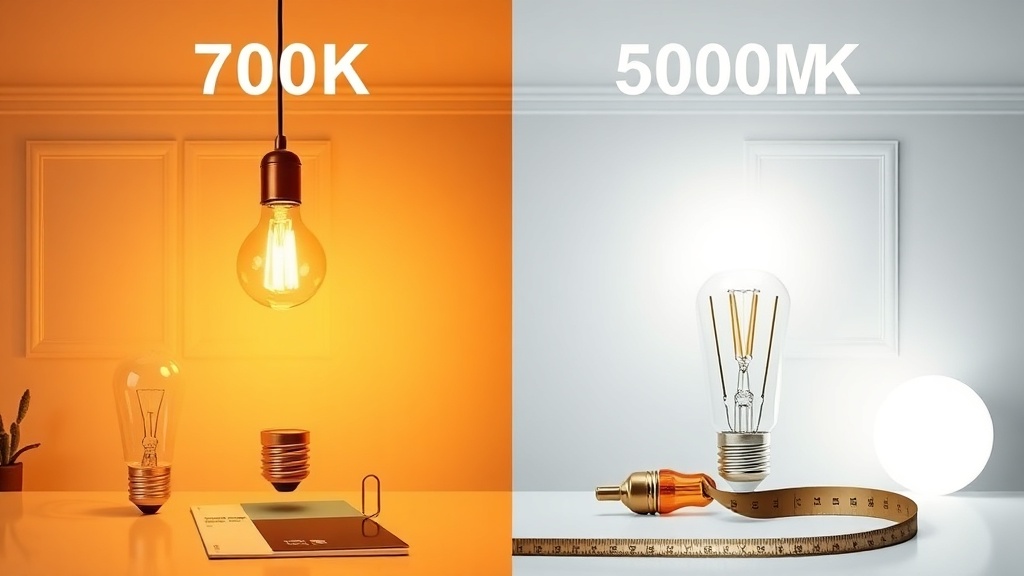
Kelvin measures the color cast of your bulb. Lower numbers are warmer (amber/yellow); higher numbers are cooler (blue/white). Here is the actual spectrum you will encounter at the hardware store:
- 2200K–2400K: Candlelight. Deep amber. Very warm. Think Edison-style filament bulbs.
- 2700K: The classic incandescent warm glow. This is what most people mean when they say "warm white."
- 3000K: Slightly cleaner warm. Still cozy, but with less yellow. My personal sweet spot for most residential spaces.
- 3500K: Neutral. Neither warm nor cool. Common in commercial spaces. Rarely the right call for a home.
- 4000K–5000K: Cool white to daylight. Clinical. Energizing. Useful in exactly two rooms (I will get to that).
- 5000K+: Daylight simulation. If you put these in your bedroom, you deserve what happens to your sleep cycle.
The biggest mistake I see? Mixing Kelvin temperatures in the same room. A 2700K table lamp next to a 4000K ceiling fixture creates a visual argument that your brain registers as "something feels off" without being able to name it. Pick one temperature per room. Non-negotiable.
CRI — How Honestly the Light Shows Color
CRI stands for Color Rendering Index, scored 0–100. A bulb with CRI 100 shows colors exactly as they appear in natural sunlight. A bulb with CRI 80 is lying to you about 20% of the spectrum — and the colors it lies about tend to be reds and skin tones, which is why your bathroom mirror lighting makes you look slightly dead.
My hard rule: never go below CRI 90 in any room where you look at colors. That means kitchens, bathrooms, closets/dressing areas, and anywhere you display art. CRI 80 is acceptable in hallways and utility spaces. Below 80, you are living inside a gas station.
The Room-by-Room Kelvin Prescription
This is not subjective. These numbers are based on task requirements, circadian rhythm research, and the fact that I have personally re-lamped enough apartments to know what actually works versus what sounds good on a mood board.
Living Room: 2700K–3000K | CRI 90+
Your living room needs to handle two modes: daytime socializing and evening unwinding. I recommend 3000K for overhead or primary fixtures (clean enough for afternoon use) and 2700K for table/floor lamps (warmer for evening layering). Both should be dimmable. If you can only pick one temperature, go 2700K. Nobody ever complained that their living room felt too cozy.
Kitchen: 3000K | CRI 95+
The kitchen is where CRI matters most. You are judging whether meat is cooked, whether produce is fresh, whether that stain on the counter is wine or something worse. At CRI 80, raw chicken and cooked chicken look alarmingly similar under certain conditions. Go 3000K for warmth that does not fight your cabinet finishes, but insist on CRI 95 if you can find it. The price difference is about $2 per bulb. Spend the $2.
Under-cabinet task lighting can go up to 3500K since it is localized and functional, but match your overhead Kelvin for the main fixtures.
Bedroom: 2700K | CRI 90+
This is the one room where I am absolute: 2700K, dimmable, no exceptions. Cooler light suppresses melatonin production. If you have 4000K bulbs in your bedroom, you are paying your electric company to give you insomnia. Reading lamps can be slightly brighter in lumen output but should stay at 2700K. If you need task lighting for a desk area within the bedroom, use a dedicated fixture at 3000K with a shade that contains the light pool — do not blast the whole room.
Bathroom: 3000K | CRI 95+
Bathrooms are where most people get lighting catastrophically wrong. The two common mistakes:
- Overhead-only downlights: These cast shadows under your brow, nose, and chin. You look 10 years older. Vanity lighting should come from the sides of the mirror (sconces at roughly 66" center height) or from a bar above and in front of the mirror — never recessed directly overhead.
- Cool white "to see better": 4000K–5000K in a bathroom amplifies every flaw and makes skin tones look grey. 3000K at CRI 95 gives you accurate color rendering without the interrogation room aesthetic. You can see your actual skin tone, your actual hair color, and whether your outfit actually matches.
Home Office: 3000K–4000K | CRI 90+
This is the one room where personal preference legitimately matters. If you work better in cooler, more alert-feeling light, 4000K is fine here. If your office shares visual space with a warmer-toned living area, stay at 3000K to avoid the Kelvin clash I mentioned earlier. One non-negotiable: your monitor and your room lighting should not be in wildly different color temperatures, or you will get eye fatigue by 2pm. Match your overhead to roughly what your screen emits in its "warm" or "night" mode.
Dining Room: 2700K (Dimmed) | CRI 90+
Dining lighting should make food look appealing and people look good. That is literally its only job. 2700K on a dimmer, pulled down to about 60–70% intensity for evening meals. Pendant fixtures 30–36" above the table surface. If you have a chandelier that takes decorative bulbs, 2200K–2400K filament-style LEDs are beautiful here — just make sure they are dimmable and not the flicker-prone budget versions.
Hallways, Stairs, Closets: 3000K | CRI 80+
Transition spaces. You are not doing color-critical work here. 3000K keeps them consistent with adjacent rooms (critical for open floor plans where you can see from the hallway into the living room). CRI 80 is fine. Save your CRI 95 budget for kitchens and bathrooms.
One exception: walk-in closets where you get dressed. Treat those like bathrooms — 3000K, CRI 95, with light coming from multiple angles so you can actually see what that navy blazer looks like before you leave the house.
The Three Purchases That Fix 90% of Home Lighting
You do not need to rewire anything. These three moves, done in order, will transform how your home looks and feels:
- Replace every bulb with the correct Kelvin for its room. Budget about $50–80 for a typical apartment. Buy all the same brand within a room — different manufacturers interpret "2700K" with slightly different tints, and yes, you will notice.
- Add dimmers to your living room, bedroom, and dining room. Lutron Caseta or Lutron Diva are my go-to recommendations. Smart dimmers if you want app control; basic dimmers if you just want the switch on the wall. Budget $25–40 per switch, or hire an electrician for about $75–100 per switch installed if you are not comfortable with wiring.
- Add one table or floor lamp per room that currently only has overhead lighting. A single overhead fixture is the acoustic equivalent of one speaker mounted on the ceiling — technically functional, emotionally flat. Layered lighting (overhead + task + ambient) gives a room dimension. You do not need expensive fixtures. You need correct placement and correct bulbs.
What to Ignore
"Tunable white" smart bulbs: Technically interesting, practically pointless for most people. You will set them once and never adjust them again. Save the money and just buy the right fixed-Kelvin bulb.
"Daylight" bulbs for seasonal depression: These serve a medical purpose and should be used in a dedicated light therapy device aimed at your face for 20–30 minutes in the morning, not installed in your ceiling fixtures where they will make your entire room look like a fluorescent office from 1997.
RGB color-changing bulbs for "mood lighting": Unless you are running a DJ booth or a teenager's gaming setup, colored light does not make a room look designed. It makes it look like a Best Buy demo. If you want mood, dim a warm white bulb. That is the mood.
The Tape-to-Your-Phone Summary
Lighting is the single cheapest renovation in interior design with the highest visual return. A $6 bulb change has more impact than a $600 throw pillow. But only if you pick the right numbers:
- Living room: 2700–3000K, CRI 90+, dimmable
- Kitchen: 3000K, CRI 95+
- Bedroom: 2700K, CRI 90+, dimmable
- Bathroom: 3000K, CRI 95+
- Office: 3000–4000K, CRI 90+
- Dining: 2700K, CRI 90+, dimmable
Now go check what is currently screwed into your bedroom ceiling. I will wait.