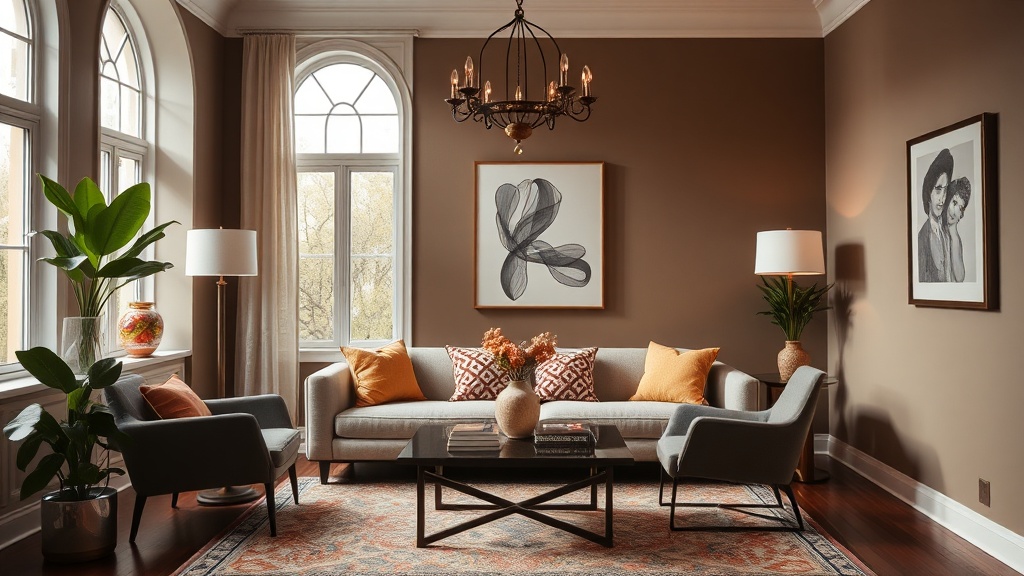
The Rule of Three: Instantly improve Any Room's Style

Quick Tip
Arranging decor in odd numbers, especially threes, creates visual tension and balance that feels more natural and interesting than even pairs.
This post breaks down the rule of three — a simple styling principle that turns random objects into deliberate, eye-catching vignettes. You'll discover why odd-numbered groupings feel more alive than symmetrical pairs, and how to use this trick on shelves, coffee tables, and mantels without spending a dime or hiring a stylist.
What is the rule of three in interior design?
The rule of three is the practice of arranging objects in odd-numbered clusters — most often three — to create visual tension and a sense of balance. (Even pairs can feel static, like bookends staring at each other across a shelf.) Your brain is wired to find asymmetry more interesting. A tall ceramic vase, a mid-height taper candle in a brass holder, and a low stack of hardcovers form an invisible triangle that guides the eye naturally from one object to the next. It's not magic — it's basic composition.
How do you style a coffee table using the rule of three?
Start with three items of varying heights, textures, and shapes. A glazed ceramic bowl from West Elm, a vintage brass candlestick, and a small stack of design books works beautifully. That said, don't line them up like soldiers on parade. Offset the tallest piece slightly left, place the medium object behind it, and tuck the smallest in front to create depth. Here's the thing: scale matters far more than price tag. A $12 terracotta pot from IKEA can anchor the same tray as a travertine sphere that costs ten times as much — what counts is the height variation and the dialogue between textures.
| Grouping Size | Mood | Best Placement |
|---|---|---|
| Pair (2) | Formal, symmetrical | Nightstands, wall sconces, bedside tables |
| Three (3) | Relaxed, dynamic | Coffee tables, mantels, entryway trays |
| Five (5) | Collected, layered | Bookshelves, long console tables, window sills |
Can the rule of three work on a tight budget?
Absolutely — and this is exactly where the principle proves its worth. You don't need to buy a single new object. Walk through your home with fresh eyes. That handmade ceramic mug, a sprig of dried eucalyptus from the yard, and a smooth stone collected on vacation? That's a grouping. The catch? They need one common thread — color, material, or shape — so the trio reads as intentional rather than leftover clutter. For cohesive color ideas, browse Sherwin-Williams paint palettes to see how pros tie disparate objects together into a unified story.
Worth noting: the rule isn't rigid. Three can expand to five or seven on a long credenza, but stop before the surface looks like a flea market explosion. (Editing is a skill too.) Try it right now — move two matching objects apart, slide a trailing pothos or a sculptural piece between them, and step back. The room just breathed.