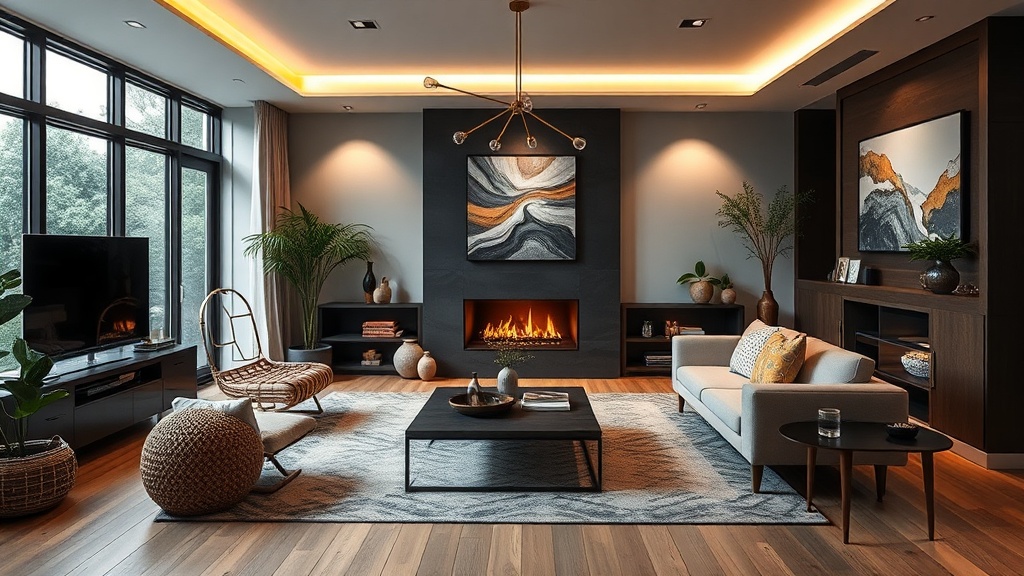
The Ultimate Guide to Creating a Cozy Modern Living Room

What This Guide Covers (And Why Your Living Room Actually Matters)
This guide walks through the anatomy of a cozy modern living room—from furniture placement to lighting layers to the tactile details that make a space feel like home. The living room is where life happens: morning coffee, evening wind-downs, the occasional overwhelmed collapse onto the sofa. Getting it right isn't about chasing trends or maxing out credit cards. It's about understanding how you actually live and building a space that supports those rhythms. By the end, you'll have a practical framework for creating a room that looks collected, not decorated—and feels genuinely comfortable, not staged.
What Makes a Living Room "Modern" vs. Just Minimalist?
Modern design prioritizes clean lines, intentional negative space, and materials that feel honest—wood that looks like wood, metal that hasn't been disguised. It's not about stripping everything away until you're sitting on a concrete block in a white box. The catch? Many people confuse modern with cold.
Warm modernism—that sweet spot between sleek and inviting—relies on texture and tonal layering. Think of it as architectural precision wearing a cashmere sweater. You'll want to mix materials: a leather sofa against a wool rug, matte black accents beside honey-toned oak. The goal is visual clarity without emotional sterility.
Start with a neutral foundation—greige, warm white, or soft charcoal walls—and build from there. Avoid the trap of matching everything. A room where every wood tone is identical feels like a furniture showroom. Instead, embrace tonal variation: light oak side tables, walnut media console, perhaps a birch accent chair. The eye reads this as depth, not chaos.
How Do You Arrange Furniture for Both Conversation and Comfort?
Pull seating pieces toward the center of the room, creating intimate zones rather than pushing everything against the walls. This sounds counterintuitive—won't it make the space feel smaller? Actually, no. Floating furniture defines the room's purpose and eliminates that awkward "dance hall" effect where people shout across ten feet of empty carpet.
Here's the thing: modern doesn't mean rigid. The classic conversation arrangement—sofa facing two chairs with a coffee table anchoring the middle—still works because it works. But tweak it for real life. Angle that accent chair slightly toward the sofa. Add a side table within arm's reach of every seat. Nobody wants to balance a wine glass on their knee.
Traffic flow matters. Leave at least 30 inches between pieces for comfortable passage. If your living room serves multiple functions—TV watching, reading, maybe a desk corner—use rugs to zone the space visually. A properly sized rug (front legs of all major seating on it, please) grounds the arrangement and absorbs sound.
| Layout Challenge | Solution | Real-World Example |
|---|---|---|
| Long, narrow room | Create two zones: seating at one end, reading nook at the other | Article Sven sofa facing fireplace; CB2 Drommen chair by window |
| Open concept with kitchen | Use a console table behind the sofa as a visual barrier | West Elm Industrial Storage Console defines the boundary |
| Small square room | Float seating in a U-shape; skip the coffee table for an ottoman | Room & Board Hess ottoman (storage + surface) |
| TV as focal point | Mount at eye level when seated; flank with bookshelves for balance | Samsung Frame TV + IKEA Billy bookcases, painted same color as wall |
What Lighting Layers Actually Look Like in Practice?
Three layers minimum: ambient (overhead), task (reading), and accent (mood). Most living rooms stop at the ceiling fixture and wonder why everything feels flat. Light defines how we experience a space—literally shaping what we notice and what fades into the background.
For ambient light, recessed cans are fine but uninspired. Consider a statement pendant or semi-flush mount that draws the eye upward. The West Elm Staggered Glass Chandelier diffuses light beautifully without dominating smaller rooms. Install dimmers everywhere. Full stop. Light should flex from bright cleaning mode to barely-there movie night.
Task lighting is where personality emerges. A pharmacy floor lamp behind the reading chair. Slim sconces flanking the sofa for evening conversation. The Schoolhouse Isaac Sconce has that perfect mid-century-meets-industrial vibe that slots into modern schemes effortlessly.
Accent lighting creates depth—picture lights over artwork, LED strips behind the TV to reduce eye strain, perhaps a sculptural table lamp that doubles as art. The menu of options from Flos (particularly the Arco floor lamp) represents investment-grade pieces that anchor a room for decades. That said, Target's Project 62 line offers surprisingly sophisticated alternatives at fractions of the cost.
How Do You Add Warmth Without Cluttering the Space?
Texture is the secret weapon. Modern spaces risk feeling clinical because they lack tactile variation—everything smooth, hard, reflective. Counter this with intention. A chunky knit throw draped over a leather sofa. Linen curtains that puddle slightly on the floor. A vintage Berber rug with irregular patterns and actual wool smell.
Plants are non-negotiable. Not fake ones—real, slightly imperfect, occasionally dropping a leaf plants. A fiddle leaf fig in the corner (yes, they're finicky, but they're architectural). A trailing pothos on a high shelf. A snake plant beside the media console tolerating your neglect with stoicism. These living elements soften edges literally and visually.
Art and objects should tell a story, not fill a quota. One large piece commands more respect than a cluster of small frames. Mix photography with abstract painting with something three-dimensional—perhaps a ceramic vessel or sculptural object collected from travels. The goal is curated, not decorated. If you wouldn't pack it for a cross-country move, question whether it deserves display space.
Books matter. Not as color-coded props arranged by spine shade (please, resist this Instagram trend), but as actual books you've read or intend to. Stack them horizontally with a small object on top. Line a shelf vertically, unevenly, allowing breathing room. They add warmth through implied use—the suggestion of someone actually living here, thinking, learning, pausing to mark a page.
What Should You Actually Spend Money On?
The sofa. Full stop. It's the workhorse of the living room—sat on, napped on, occasionally cried on. A cheap sofa looks cheap immediately and degrades rapidly. The Article Sven (around $2,000) offers full-grain leather that ages like wine. Room & Board's Metro collection provides custom fabrics and lifetime-quality frames starting near $1,500. Expect to keep a good sofa for 15 years minimum.
Save on: trendy accessories, throw pillows (IKEA covers swapped seasonally), and anything purely decorative that doesn't serve function. That ceramic bowl from Target catches keys just as effectively as the handcrafted version from a boutique—though the boutique piece might spark more joy if the budget allows.
Worth noting: rugs are worth the investment, but they don't require five figures. Rugs USA and Overstock carry wool and jute options under $500 that outperform synthetic alternatives. A 9x12 rug properly sized for your seating arrangement does more for the room than almost any other single purchase.
Quick Wins Under $100
- Upgrade lampshades from white paper to textured linen or silk
- Add cabinet pulls to basic IKEA storage (try Etsy for vintage brass options)
- Fresh pillows in varied textures—velvet, wool, maybe a subtle pattern
- A single large plant in a simple terracotta pot
- Swap basic light switches for matte black or brass toggle versions
How Do You Maintain a Modern Living Room Long-Term?
Edit ruthlessly. Modern spaces have breathing room because they're not stuffed with every passing interest. Adopt a one-in-one-out policy. When you buy that new throw pillow, an old one departs. This prevents the gradual clutter creep that turns sleek into chaotic.
Clean lines require actual cleaning. Dust settles on flat surfaces in modern rooms more visibly than in traditional spaces with pattern and ornament everywhere. The trade-off: cleaning is faster because there are fewer objects to move. A microfiber cloth and five minutes weekly maintains the intended look.
Rearrange seasonally. Not dramatically—just enough to keep the space feeling fresh. Swap the throw blanket. Rotate the art. Move that ceramic vessel from the coffee table to the bookshelf. These micro-changes cost nothing but prevent the "museum exhibit" stagnation where a room looks finished and then frozen.
Your living room should evolve as you do. The best modern spaces aren't time capsules of a single design moment—they're frameworks that accommodate new books, new hobbies, new phases of life while maintaining that core DNA: clean, warm, intentional, and genuinely livable.