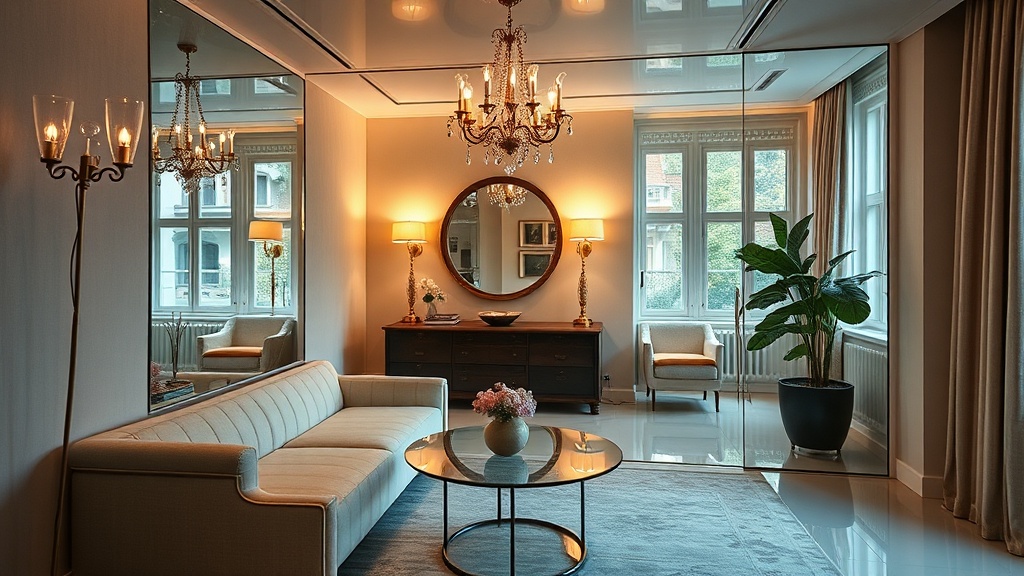
Use Mirrors to Instantly Double Your Room's Visual Space

Quick Tip
Position a large mirror opposite or adjacent to a window to instantly double the natural light and visual depth of any room.
Mirrors don't just reflect—they're architectural cheat codes. Place one correctly and a cramped bedroom breathes. A dark hallway catches window light. You didn't build a bigger room. You just outsmarted the one you've got.
Where should you place a mirror to make a room look bigger?
Opposite windows is the gold standard. A mirror facing natural light bounces it deep into the room—sometimes doubling the perceived daylight hours. Behind furniture (sofas, consoles, beds) adds depth without eating floor space. Hallways benefit from placement at the terminus—walking toward reflection tricks the eye into seeing continuation.
Height matters more than most realize. The center of the mirror should sit at average eye level—roughly 57 to 60 inches from the floor. Go lower in dining rooms (people sit) and slightly higher in entryways.
What size mirror works best for small spaces?
Bigger than you're comfortable with, usually. A common mistake? Dinky mirrors floating on vast walls. Here's the thing: one oversized piece trumps a gallery of small frames. Aim for a mirror that's roughly two-thirds the width of the furniture beneath it.
Quick reference for sizing:
| Wall/Furniture Width | Ideal Mirror Width |
|---|---|
| Under 40 inches | 24–30 inches |
| 40–60 inches | 30–40 inches |
| Over 60 inches | 40+ inches or multiple panels |
Floor-length leaning mirrors (the IKEA HOVET at 30×77 inches is a budget favorite) create vertical emphasis—great for rooms with low ceilings.
Which mirror styles actually expand space versus just decorating?
Frameless or thin-framed mirrors recede visually; thick ornate frames advance (pretty, but they claim territory). The catch? A frameless mirror needs clean edges—chipped corners destroy the illusion.
Convex mirrors (the dome-shaped kind) expand sightlines dramatically but distort. They're brilliant for awkward corners, terrible for checking your outfit. For a middle ground, the West Elm Antiqued Tiled Mirror fractures reflection across panels—less literal, more atmospheric.
Consider placement pitfalls:
- Opposite clutter (you're doubling the mess)
- Across from blank walls (missed opportunity—hang art there instead)
- Too high above mantels (creates a "floating head" effect)
Worth noting: mirrored furniture (coffee tables, nightstands) adds sparkle but shows fingerprints and dust mercilessly. CB2's mirrored collection offers decent options, though glass-topped pieces scratch. Choose your battles.
The best mirror placement feels accidental—like the room just happens to feel generous. That's the mark of design that actually works.