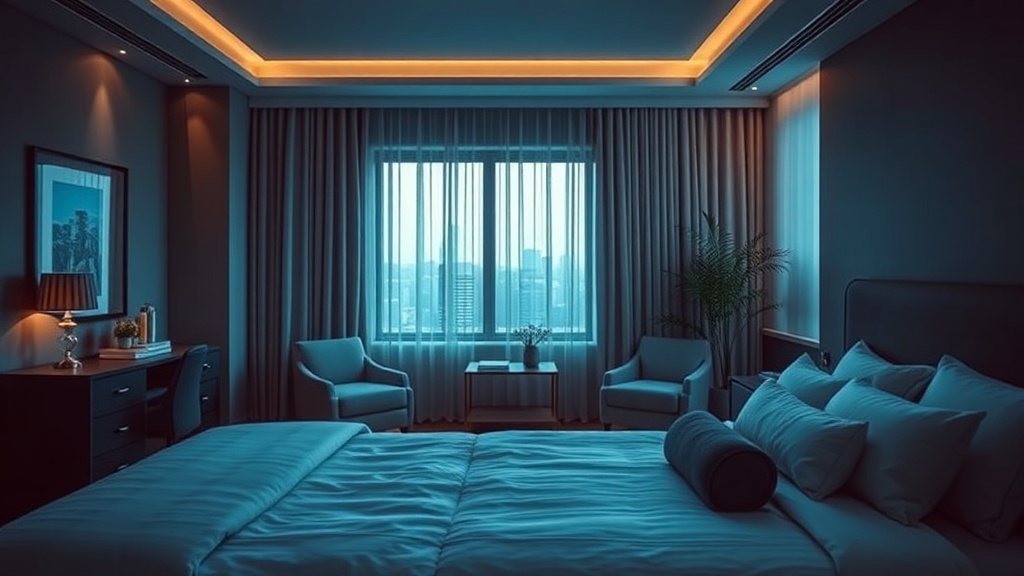
Why Does Your Bedroom Feel Like a Hotel Room (And How to Make it Feel Like a Home)?

Most people spend roughly one-third of their lives in their bedrooms, yet many current interior trends favor a clinical, showroom-ready perfection that actually suppresses human comfort. A recent study on sleep hygiene suggests that environmental cues—texture, light, and even visual complexity—play a massive role in how quickly we settle into rest. If your bedroom feels cold, sterile, or strangely impersonal, it isn't because you lack expensive furniture; it's because you've accidentally optimized for a catalog rather than for human habitation.
The problem often stems from an over-reliance on "set" mentality. We see a beautiful bedroom in a magazine, see a perfectly smooth, monochromatic bed, and think that's the goal. But a bedroom isn't a showroom; it's a sanctuary. To move from a sterile environment to a lived-in, soulful space, you have to stop thinking about furniture and start thinking about the layers of tactile interaction.
Why Does My Bedroom Feel Cold and Uninviting?
The "coldness" you feel is rarely about the temperature of the air—it's about the lack of visual and tactile warmth. In architectural terms, we look for friction. A room filled with smooth, hard surfaces (polished wood, glass, metal, slick cotton) lacks the sensory breaks the eye needs to rest. When everything is flat and reflective, the room feels ungrounded.
To fix this, you need to introduce texture through layering. This is where the "architectural precision" comes into play. Instead of buying a single, expensive duvet cover, think about the sequence of materials. You want a linen base, a heavy knit throw, and perhaps a velvet accent pillow. This creates a sense of depth. If you're looking for guidance on textile weight and quality, the Architectural Digest archives often highlight how different fabric weights affect the "mood" of a room. A room with only one texture is a room that feels unfinished.
The Role of Lighting Layers
If your bedroom relies on a single overhead light, you've already lost the battle. Overhead lighting is functional for finding a lost sock, but it's terrible for relaxation. It flattens the room and creates harsh shadows. Instead, aim for three distinct light sources at different heights. A bedside lamp for reading, a floor lamp in the corner for soft ambient light, and perhaps a small accent light on a dresser. This creates a tiered effect that makes the space feel three-dimensional and cozy.
Can I Fix a Boring Bedroom on a Budget?
The short answer is yes, and the best way to do it is through "low-stakes" updates. You don't need a new bed frame to change the energy of a room. You need to focus on the things that sit at eye level or touch your skin. This includes your linens, your wall art, and your window treatments.
Consider these three high-impact, low-cost adjustments:
- Window Treatments: Ditch the blinds. Even a simple, heavy linen curtain hung high and wide can make a room feel more expensive and "wrapped" in fabric.
- The Scent Factor: While not a visual element, scent is part of the sensory-driven design. A specific candle or even a high-quality reed diffuser can anchor the room's identity.
- The Rug Hack: If your rug is too small or too thin, the room feels disjointed. A larger, textured rug can actually make a small room feel more expansive by grounding the furniture.
A common mistake is buying "sets." A bedroom set (matching nightstand, dresser, and bed) is the fastest way to make a room feel like a hotel. It's predictable and lacks character. Instead, mix materials. Pair a wooden nightstand with a metal lamp and a fabric-upholstered headboard. This intentional "mismatching" is what creates a sense of curated history.
How Do I Choose the Right Color Palette for Rest?
Color is a psychological tool, not just an aesthetic choice. While many people gravitate toward white because it feels "clean," an all-white room can actually be quite jarring to the nervous system because there is no visual rest. A study on color psychology published by Psychology Today notes that certain hues can significantly impact heart rate and stress levels.
For a bedroom, you want colors that have a low saturation. This doesn't mean you can't use color; it means you should avoid colors that are too "vibrant" or "loud." Instead of a bright, primary red, look for a terracotta or a deep ochre. Instead of a stark white, look for a warm cream or a soft sand. These shades provide the same lightness but with a much softer edge. If you're drawn to dark colors, don't be afraid. A deep navy or a forest green can make a room feel incredibly intimate and protective, provided you balance them with warm lighting.
The key is to think about the "visual weight" of your colors. A dark wall in a small room can actually make the walls feel like they are receding, creating an illusion of infinite depth. A light wall in a large room can make it feel more intimate. It's all about how you want the space to feel when you walk through the door.
"Design is not about adding things; it's about the intentional placement of what remains."
When you go to style your bedroom, don't ask "What else can I add?" Ask "What is missing that would make this space feel complete?" Often, the answer isn't more stuff—it's better textures, more thoughtful light, and a better understanding of the scale of your objects. Stop trying to follow a trend and start building a sanctuary that actually responds to your needs.