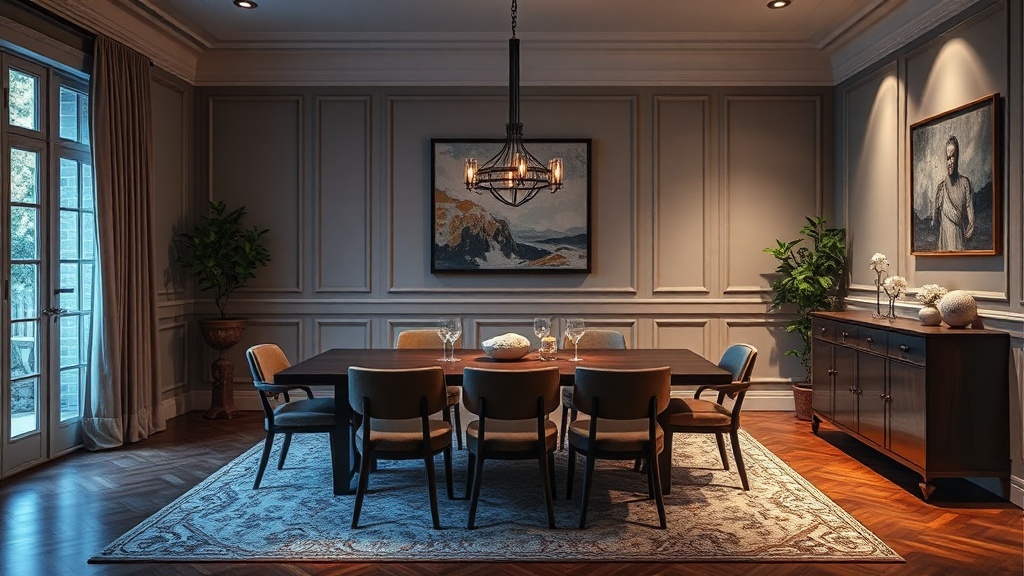
Why Does Your Dining Room Feel Formally Stiff and How Do You Soften It?

Does your dining room feel less like a place for connection and more like a museum exhibit where you're afraid to spill a drop of red wine? Most people assume a formal dining area requires heavy drapery, dark wood, and a certain level of rigidity that makes guests feel on edge. In reality, that stiffness usually stems from a lack of tactile variety and a failure to account for human ergonomics. This guide breaks down the structural and decorative reasons why dining spaces feel uninviting and how you can use texture, lighting, and layering to create a room that actually works for real life.
Why does my dining room feel so cold and uninvited?
The culprit is rarely the furniture itself; it's the lack of "visual softness." When a room consists of hard surfaces—a wooden table, a stone floor, and a flat wall—the sound bounces around and the vibe feels clinical. This is what architects call a lack of acoustic and visual absorption. To fix this, you need to introduce materials that break up the light and absorb sound. Think of it as adding a layer of comfort to the room's skeleton.
A common mistake is choosing a dining set that is too large for the footprint of the room, leaving no space for movement. If your chairs are scraping against the walls every time someone sits down, the room will always feel cramped and high-stress. You need to leave at least 36 inches between the edge of the table and the nearest wall or piece of furniture to allow for comfortable movement. This isn't just about luxury; it's about basic spatial logic.
Texture is your best tool here. If you have a heavy oak table, don't pair it with sleek, metal chairs that create a jarring contrast. Instead, try upholstered chairs with a soft fabric or even a linen slipcover. This introduces a tactile element that signals to the brain that this is a space for relaxation, not just for sitting upright and being polite. You can find excellent technical breakdowns of spatial requirements for furniture layouts at Architectural Digest to ensure your dimensions are actually functional.
Can I make a formal dining room feel casual?
The short answer is yes, and the secret lies in the "high-low" method. This involves mixing high-quality, permanent pieces with more relaxed, approachable elements. A heavy, antique dining table is a great anchor, but if you pair it with a modern, sculptural pendant light or a colorful, patterned rug, the formality drops significantly. This creates a sense of curated ease rather than stuffy tradition.
Consider these three layers to soften the mood:
- The Textile Layer: A rug under the table does more than just define the space; it grounds the furniture. A low-pile wool rug or even a jute rug can add warmth without looking like a grandma's parlor.
- The Lighting Layer: Avoid overhead lights that are too bright or purely functional. A single, beautiful light fixture that casts a warm, downward glow creates a focal point. If you're using a pendant, ensure it hangs low enough to create an intimate zone but high enough to avoid blocking sightlines.
- The Organic Layer: Plants and natural elements bring life to a room. A large ceramic vase with branches or a simple bowl of fruit on the table adds a sense of lived-in reality.
When you're shopping, look at the Better Homes & Gardens archives for inspiration on how to layer different styles without making the room look messy. The goal is a balance of structure and softness.
Does the color palette affect how cozy a room feels?
Colors have a psychological impact on the perceived temperature of a room. Cool colors—blues, greys, and crisp whites—can make a dining room feel expansive, but they can also make it feel chilly. If your dining room feels a bit too sterile, you don't necessarily need to paint the walls a dark color. You can introduce warmth through the color of your accessories instead.
A neutral wall color can be warmed up with brass hardware, wooden bowls, or even a colored linen runner. If you want a more dramatic look, consider a deep, earthy tone like terracotta or forest green. These colors absorb light differently and tend to make a room feel much more intimate and grounded. However, avoid the trap of over-decorating. A room filled with too many small, decorative objects can feel cluttered and distracting, which is the opposite of the calm, intentional space you're trying to build.
Remember, a well-designed dining room is about the intersection of function and feeling. It should be a place where the architecture of the room supports the social experience. Use your furniture to define the space, your textures to soften the edges, and your lighting to set the mood. When these elements work together, the room ceases to be a formal obstacle and becomes a functional part of your home.
"Design is not just about how a space looks, but how it makes the person standing in it feel. A dining room should feel like a hug, not a lecture."
When you approach your dining room through the lens of scale and texture, you move away from the "rules" of interior design and toward the reality of living well. Don't be afraid to break the traditional mold. A formal room that is actually comfortable is always more successful than a perfect room that is impossible to live in.