Why Your Rug Looks Too Small and How to Fix the Scale

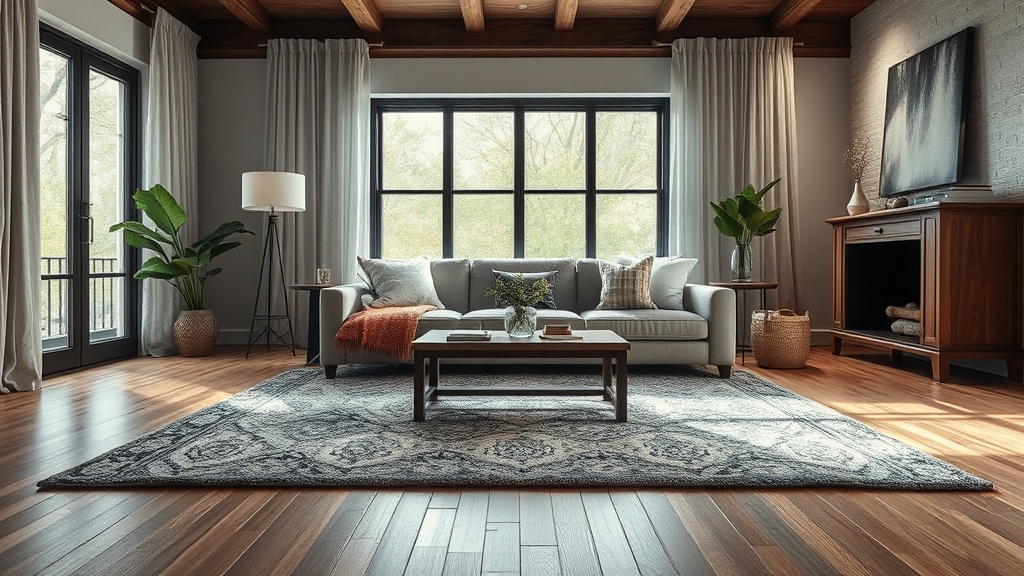
Imagine you've just spent a significant chunk of your budget on a beautiful, high-quality wool rug. It looks stunning in the showroom, but the moment you roll it out in your living room, something feels... off. The furniture looks like it's floating on tiny islands rather than sitting in a cohesive group. The room feels disjointed, the walkways feel cramped, and the rug—despite being a high-end piece—looks like a postage stamp in the middle of a vast sea of hardwood. This isn't a failure of your taste; it's a failure of scale.
In architecture, we don't just look at the objects; we look at the relationship between the object and the volume of the room. A rug is the anchor of a seating area. If the anchor is too small, the whole ship feels adrift. Most people buy rugs based on the square footage of the room, which is a mistake. You shouldn't buy for the room's size; you should buy for the furniture's footprint. Let's break down the mechanics of rug sizing so you stop making that common mistake.
Why does my rug feel like it's floating in the middle of the room?
That "floating" sensation happens when the rug is too small to touch any of the major furniture pieces. When a rug is isolated under a coffee table, it creates a visual vacuum. It draws the eye to a small, empty patch in the center while leaving the edges of the room feeling neglected. This is often called the "island effect." To fix this, you need to ensure the rug is interacting with your furniture in a way that creates a sense of unity.
The most common way to anchor a room is to place the front legs of your sofa and chairs on the rug. This creates a visual link between the seating and the floor. If you have a very large room, you might even want all four legs of the furniture to sit on the rug. If you're working with a tight budget, don't feel pressured to buy a massive single rug. You can use layering—a common trick in high-end design—to add size and texture without the astronomical cost of a 12x15 hand-knotted piece.
Check out the Architectural Digest guidelines on spatial proportions if you want to see how professionals handle large-scale volumes. A rug should feel like it's holding the furniture together, not just sitting underneath it.
What size rug do I need for a living room?
There is no single "magic number," but there are specific rules of thumb that prevent the mistakes I see most often. Here is a quick breakdown of how to approach different seating arrangements:
- The Full Connection: All furniture legs sit on the rug. This is the most expensive way to go because it requires a massive rug, but it provides the most cohesive, "designed" look.
- The Front-Leg Anchor: Only the front legs of the sofa and chairs touch the rug. This is the standard for most medium-sized rooms and provides enough visual weight to keep the pieces connected.
- The Coffee Table Method: Only the coffee table sits on the rug. I generally advise against this unless you are working in a very small, tight space. It often makes the room look fragmented.
If you're unsure, grab a roll of painter's tape from the hardware store. Map out the rug dimensions on your floor before you hit "buy" on that website. Seeing the actual footprint on your floor is much more reliable than looking at a digital rendering. It lets you see exactly where the rug will end in relation to your walkways and doorways.
Can I use a smaller rug if I have a large room?
If you have a massive living room and a budget that doesn't allow for a massive rug, you have two options: layering or zone creation. Layering involves placing a smaller, patterned or textured rug (like a jute or sisal) on top of a larger, neutral rug. This adds the necessary scale while keeping the cost manageable. It also adds a layer of tactile interest that a single flat rug lacks.
Another approach is to treat the room as multiple zones. Instead of one giant rug that attempts to cover everything, create a distinct zone for the seating area and a separate zone for a reading nook or a console table. This is a common tactic in open floor plans to prevent the space from feeling like an empty warehouse. By defining these zones, you're using the rugs to create "rooms within a room."
| Furniture Setup | Rug Strategy | Visual Result |
|---|---|---|
| Large Sectional | All legs on rug | Unified, grand, cohesive |
| Standard Sofa & 2 Chairs | Front legs on rug | Balanced, grounded, stable |
| Small Apartment Nook | Coffee table only | Minimalist, but risky |
Remember, a rug is a structural element of the room's layout. It's not just a piece of fabric; it's a boundary. If the boundary is too small, the boundaries of your room feel undefined. For more technical advice on how to measure your space accurately, you can visit Bob Vila for practical home improvement guides. Always prioritize the footprint of your furniture over the empty space around it.
Stop thinking about the rug as an accessory. Think of it as the foundation of your seating group. When you select a rug based on the footprint of your furniture rather than the square footage of your floor, you'll immediately notice the room feels more intentional and less like a collection of furniture pieces dropped into a space.