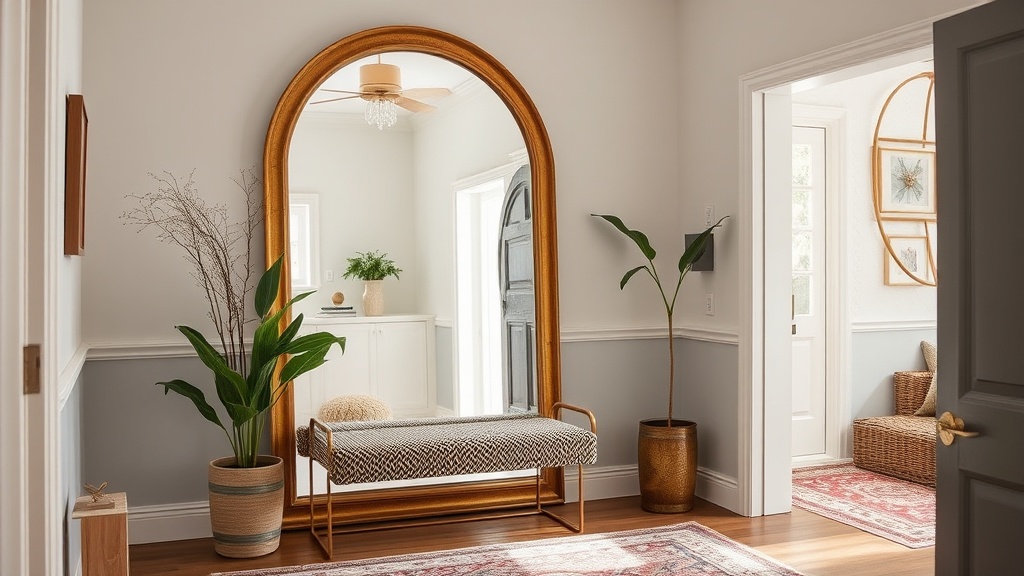
Elevate Your Entryway with a Statement Mirror Hack

Quick Tip
Position your mirror directly opposite a light source to maximize natural light reflection throughout the room.
A heavy oak door swings open to reveal a cramped, dim vestibule. The walls feel close, the ceiling feels low, and the single overhead light casts harsh, unflattering shadows against a cluttered console table. This is the common architectural failure of the modern entryway: a lack of visual depth that makes a transition space feel like a bottleneck rather than an invitation.
The Geometry of Light and Depth
The most effective way to solve a small entryway puzzle isn't through paint or new furniture, but through the strategic placement of a statement mirror. A mirror acts as a "virtual window," bouncing light from adjacent rooms and tricking the eye into perceiving an additional dimension of space. However, the mistake most people make is choosing a mirror that is too small for the scale of the wall, which actually emphasizes the cramped proportions.
To achieve architectural balance, follow these structural rules:
- The 2/3 Rule: Your mirror should occupy approximately two-thirds of the width of your console table or sideboard. If you have a 48-inch West Elm Mid-Century Console, look for a mirror that is roughly 32 to 36 inches wide.
- Verticality vs. Horizontality: In a hallway with low ceilings, use a large circular mirror (like a Reeded Glass Round Mirror) to soften the harsh lines of the walls. If the entryway is narrow but long, a tall, arched floor mirror can draw the eye upward, creating the illusion of height.
- Reflective Surface Quality: Avoid cheap, thin glass that creates a "funhouse" distortion. Look for heavy-duty glass with a substantial frame—be it matte black metal for an industrial edge or brushed brass for a classic touch.
The Pro-Level Installation Hack
Don't just hang a mirror; curate a vignette. To prevent the mirror from looking like an afterthought, layer it with functional and aesthetic elements. Place a small, textured ceramic tray on the console for keys, and add a single sculptural element—perhaps a tall branch in a heavy stoneware vase—to one side. This creates a sense of asymmetrical balance that feels intentional rather than cluttered.
If you are looking to add more organic texture to your transition spaces, consider the art of biophilic design to integrate greenery alongside your new reflective centerpiece. By treating the entryway as a structured composition rather than a storage zone, you transform a mere passage into a high-impact architectural moment.