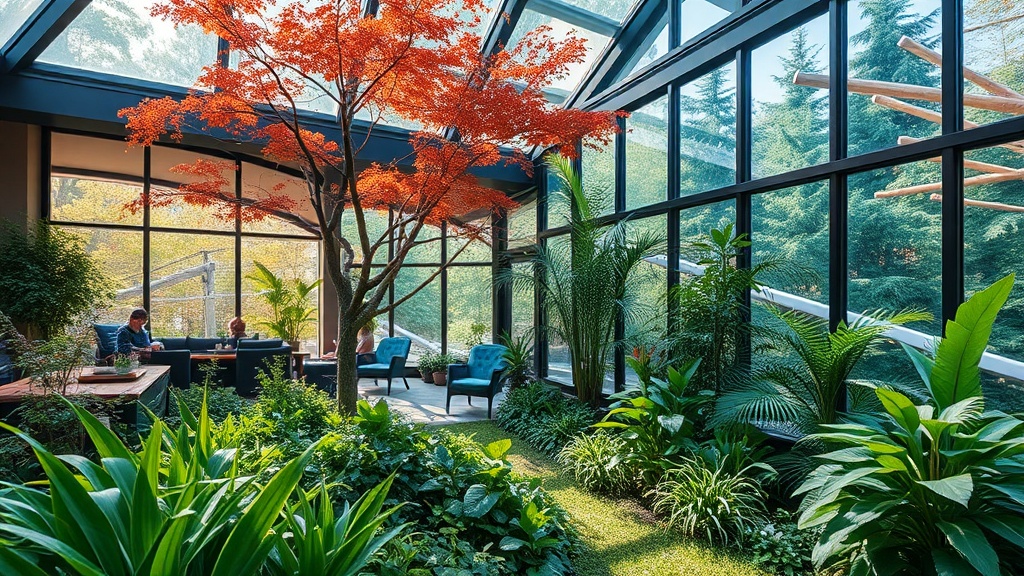
The Art of Biophilic Design: Bringing the Outdoors In

For years in my architectural practice, I watched clients treat "nature" as an afterthought—a single, lonely fiddle leaf fig tucked into a corner of a sterile, white-walled room. They treated plants like accessories, much like a throw pillow or a sculptural vase. But there is a fundamental flaw in that approach. Nature isn't an accessory; it is a biological necessity.
This is the core of biophilic design. It is not merely "decorating with plants." It is a systematic approach to interior architecture that seeks to satisfy our innate human tendency to seek connections with nature and other forms of life. When we design with biophilia in mind, we aren't just making a room look "pretty"; we are optimizing the space for human cognitive function, stress reduction, and physiological well-being. We are moving away from the "white box" mentality and toward spaces that breathe.
The Three Pillars of Biophilic Design
To move beyond the superficial, we have to understand the structural layers of a biophilic space. In my design classes, I break this down into three distinct categories: Nature in the Space, Natural Analogues, and the Nature of the Space. Understanding these will help you solve the "design puzzle" of your own home without needing a massive renovation budget.
1. Nature in the Space (Direct Presence)
This is the most literal application. It involves the actual, physical presence of nature within your living environment. This isn't just about a potted monstera; it’s about the dynamic elements of the natural world.
- Light: Not just "bright" light, but the movement of light. The way shadows shift across a floor as the sun moves through the afternoon is a vital connection to the passage of time.
- Air: Incorporating airflow—whether through strategically placed windows or the gentle movement of a ceiling fan—prevents a room from feeling stagnant.
- Water: The sound and sight of water can lower cortisol levels. This could be as simple as a small, recirculating stone fountain on a mantle.
- Plants: Using varied textures, heights, and species to create a sense of a living ecosystem rather than a static arrangement.
2. Natural Analogues (Indirect Presence)
When you don't have a garden or a massive window, you use analogues. These are human-made elements that mimic the patterns, textures, and forms found in nature. This is where most people fail because they choose "nature-inspired" patterns that feel synthetic or kitschy. To do this well, look for organic complexity.
Think about the difference between a plastic leaf pattern and a hand-woven jute rug. One is a cheap imitation; the other is a tactile connection to a natural material. If you are looking to refresh your space, you might explore high-low design hacks on a budget to find organic textures like linen, reclaimed wood, or unpolished stone that bring this depth to a room without the luxury price tag.
3. Nature of the Space (Spatial Configuration)
This is the most advanced level of biophilic design, and it’s where my architectural background becomes most relevant. It’s about how the volume of a room makes you feel. Nature provides two specific spatial experiences: Prospect and Refuge.
Prospect is the ability to see into the distance—an open view that provides a sense of surveillance and opportunity. Refuge is the feeling of being protected, like a cozy nook or a low-ceilinged alcove. A well-designed home should offer both. If a room is too open, it feels exposed; if it is too enclosed, it feels claustrophobic. A successful layout balances these two primal needs.
Practical Implementation: Solving the Design Puzzle
You don't need to tear down walls to implement these concepts. You can solve these puzzles through intentional curation. Here is how to approach specific areas of your home.
Mastering Natural Light and Shadow
Light is the most powerful tool in your kit, but most people use it incorrectly. They either flood a room with harsh overhead light or leave it dim and lifeless. To achieve a biophilic atmosphere, you must embrace layered lighting. Instead of relying on a single bright source, use a combination of ambient, task, and accent lighting to create depth and mimic the way light filters through a forest canopy. For a deeper dive into this, read my guide on the golden rule of layered lighting for cozy rooms.
Consider the "Golden Hour" in your home. How does the light hit your furniture at 4:00 PM? If your space feels cold, it may be because you are using light that is too "blue" or clinical. Incorporate warm-spectrum bulbs and use sheer curtains to diffuse sunlight, creating a soft, dappled effect that feels organic rather than artificial.
Texture and Materiality
In a digital age, we are starved for tactile input. A room filled with smooth, synthetic surfaces (plastic, polished metal, laminate) feels sterile because it lacks "sensory complexity." To bring the outdoors in, introduce materials that have a "life story."
- Wood: Look for grains that are visible and tactile.
- Stone: Even a small marble tray or a stone coaster adds a sense of geological permanence.
- Textiles: Swap synthetic polyester for cotton, wool, or hemp.
If you are a fan of bolder, more curated aesthetics, you can even use these textures to ground a more dramatic look. For instance, a textured stone or wood element can provide the perfect backdrop for creating a moody maximalist gallery wall, where the organic textures prevent the heavy colors from feeling overwhelming.
The Greenery Strategy: Beyond the "Plant Parent" Cliché
The biggest mistake I see is "plant clutter"—buying twenty different plants and scattering them randomly. This creates visual noise, not a biophilic connection. To do this like an architect, think in clusters and levels.
- Create a Focal Point: Instead of five small pots on a windowsill, try one large, statement tree (like a Ficus or an Olive tree) in a heavy ceramic pot. This provides a sense of "Prospect and Refuge."
- Vary the Heights: Use plant stands, hanging planters, and floor vessels to create a vertical gradient. This mimics the layered structure of a natural forest floor and canopy.
- Consider the Season: Your indoor greenery should reflect the rhythm of the outside world. In the spring, lean into lighter, more delicate foliage. In the winter, use deeper, more structural greenery. For more inspiration on seasonal transitions, check out these timeless biophilic design elements.
The Psychology of Space: Why It Matters
Why am I being so pedantic about the difference between a "plant" and a "biophilic system"? Because the stakes are higher than just aesthetics. Research consistently shows that environments that incorporate natural elements can reduce heart rates, improve concentration, and even speed up recovery times in clinical settings.
When we live in spaces that are purely artificial, our brains are constantly working to process the lack of stimuli. We are essentially living in a sensory vacuum. By introducing fractal patterns (the repeating shapes found in leaves and snowflakes), natural light, and organic materials, we are giving our nervous systems a chance to regulate. This is why a walk in the woods feels restorative—it is because the environment is providing the exact level of complexity our brains crave.
"Design is not just about what a space looks like; it is about how a space functions as a living system for the human beings within it."
Whether you are looking to overhaul a room or simply want to make your home feel less like a box and more like a sanctuary, start with the elements. Look at your light, look at your textures, and look at your shadows. The outdoors isn't just something you look at through a window; it is something you should feel in the very fabric of your home.
If you are looking for more ways to refine your aesthetic as the seasons change, I highly recommend exploring the various timeless decor styles that can serve as a foundation for your biophilic journey. Design is a tool—use it to build a life that feels as good as it looks.