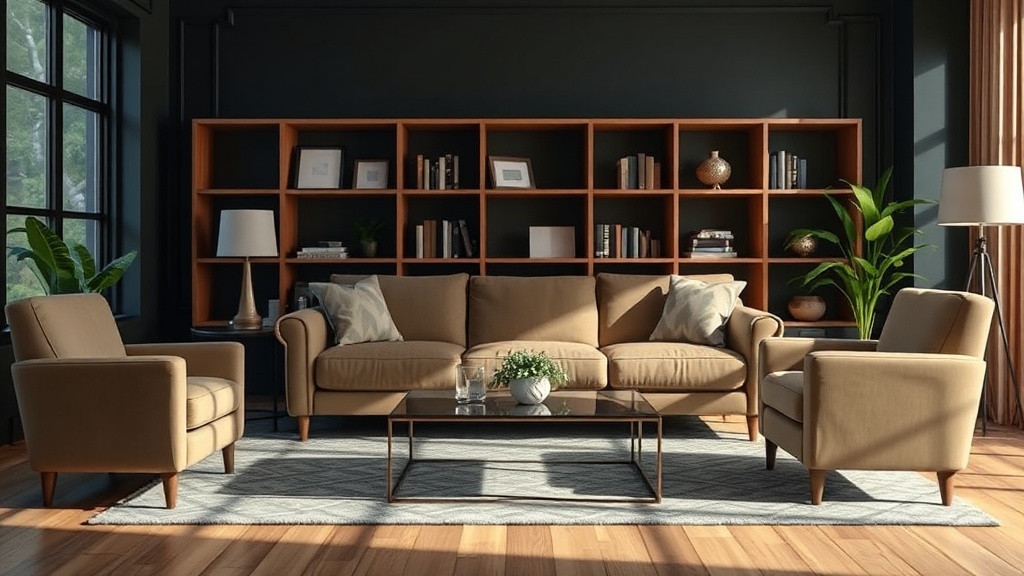
Stop Buying Furniture That Is Too Big for Your Space

Quick Tip
Always use painter's tape to outline the dimensions of a new piece of furniture on your floor before buying it.
The Scale Error That Destroys Your Room's Flow
Roughly 70% of interior design failures in residential spaces aren't caused by bad color palettes or poor lighting, but by incorrect scale. When you buy a piece of furniture based on how it looks in a showroom or a single photo, you are ignoring the mathematical reality of your own floor plan. This post explains why oversized furniture makes a room feel cramped and how to use architectural proportions to select pieces that actually work.
The "Showroom Trap"
Showrooms are designed to be cavernous, often featuring 12-foot ceilings and massive floor plates. A deep-seated, oversized sectional that looks "cozy" in a high-end studio will feel like a physical blockade in a standard 12' x 12' living room. When furniture dominates the floor area, you lose the "negative space"—the empty areas that allow the eye to move. Without this breathing room, a room feels claustrophobic rather than comfortable.
Three Rules for Measuring Success
Before you click "add to cart," apply these three structural checks to ensure your furniture fits the anatomy of your space:
- The Walkway Clearance: Always leave at least 30 to 36 inches for major traffic paths. If your coffee table forces you to shimmy past the sofa, the scale is wrong.
- The Vertical Ratio: Don't just measure the floor; measure the walls. A tall, heavy armoire in a room with low ceilings will visually "squash" the space. Match the height of your furniture to the volume of the room.
- The Visual Weight Test: A heavy, dark wood dining table with chunky legs carries more "visual weight" than a glass or metal table. If your room feels heavy or cluttered, you may need to swap a solid piece for something with a lighter silhouette.
Practical Implementation
If you find yourself struggling with a room that feels visually heavy or cramped, it is often a sign of a foundational error. If the furniture is correct but the room still feels off, check why your rug might be making the room look small. A rug that is too small to sit under the front legs of your furniture will only emphasize the scale issues of your larger pieces.
Stop shopping by "vibe" and start shopping by dimensions. Use painter's tape to outline the footprint of a potential sofa or dining table directly on your floor before purchasing. If the tape makes the room look impassable, the piece is too big.