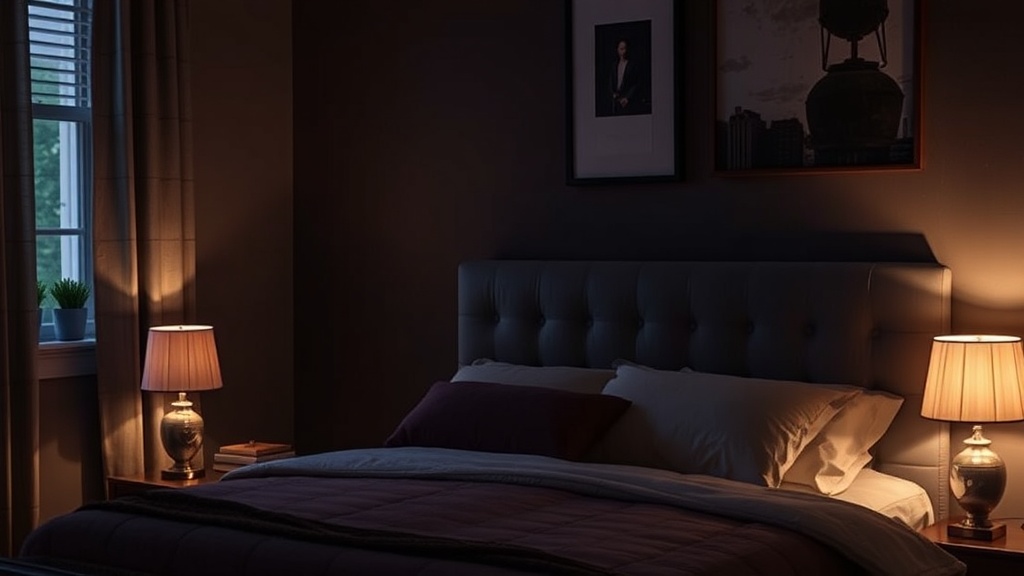
Why Your Bedside Lamps Are Too Low

Quick Tip
For comfortable reading, the bottom of your lamp shade should be roughly at eye level when you are sitting up in bed.
Does your bedroom lighting feel more like a dim basement than a relaxing sanctuary?
If you find yourself squinting at a book or feeling like your bedside table is cluttered with shadows, the culprit isn't your eyesight—it's likely the height of your lamps. Most people select lighting based on the aesthetic of the base rather than the functional physics of the light. A lamp that is too low creates harsh, direct glare and casts unflattering shadows across your face, making the space feel cramped rather than cozy.
The Golden Ratio of Bedside Lighting
In architectural drafting, we look at sightlines. When you are propped up against your pillows, your eyes are generally at a certain elevation. A well-proportioned lamp should place the bottom of the lampshade approximately at your eye level when you are sitting up in bed. This ensures that the light source is shielded by the shade, preventing the bulb from blinding you and providing a soft, diffused glow that illuminates your book without hitting your retinas directly.
To find your ideal height, follow these technical guidelines:
- The 24-to-30 Inch Rule: For a standard Queen or King mattress, aim for a lamp height between 24 and 30 inches. This keeps the light source high enough to clear the visual "noise" of your alarm clock, phone, and water carafe.
- The Shade Diameter: Ensure the shade is wide enough to cover the bulb entirely from a seated position. If you can see the filament of the bulb while sitting up, the lamp is too small or the shade is too narrow.
- The Scale Check: A tiny lamp on a large nightstand creates a "stunted" look. If your nightstand is 28 inches tall, a 12-inch lamp will look like an afterthought.
Solving the Height Problem
If you’ve already purchased beautiful lamps that are too short, don't return them. You can fix the scale using a few structural workarounds. You can swap a standard ceramic base for a taller, more sculptural piece, or use a lamp riser to add a few inches of height. If you are working with a very low platform bed, consider switching to wall-mounted swing-arm sconces to clear up surface space entirely.
Getting the scale right is a fundamental part of spatial organization. Much like learning the rule of three for styling, understanding the verticality of your furniture prevents your room from feeling "bottom-heavy." When your lighting is at the correct height, it adds a layer of structural intentionality that makes even a budget bedroom feel professionally designed.