Why Your Dining Room Lighting Feels Harsh and Uninviting

The Physics of Bad Lighting
The average household uses approximately 80% less light than is recommended for optimal human comfort, often relying on a single, high-intensity light source to illuminate an entire room. In a dining room, this mistake manifests as "interrogation lighting"—a harsh, overhead glare that flattens textures, creates unflattering shadows on faces, and makes a beautifully set table look clinical rather than inviting. This post breaks down the architectural reasons your dining room feels uninviting and provides a technical framework to fix it using layering, color temperature, and placement.
When a space feels "off," it is rarely a matter of bad taste; it is almost always a failure of light distribution. In architecture, we look at how light interacts with surfaces. If you have a single pendant light hanging directly over a table with a high-wattage bulb, you are creating a high-contrast environment. This creates deep shadows in the eye sockets of your guests and a blinding reflection on your glassware. To fix this, you must move away from the concept of a "main light" and toward the concept of "light layers."
The Three Layers of Lighting Architecture
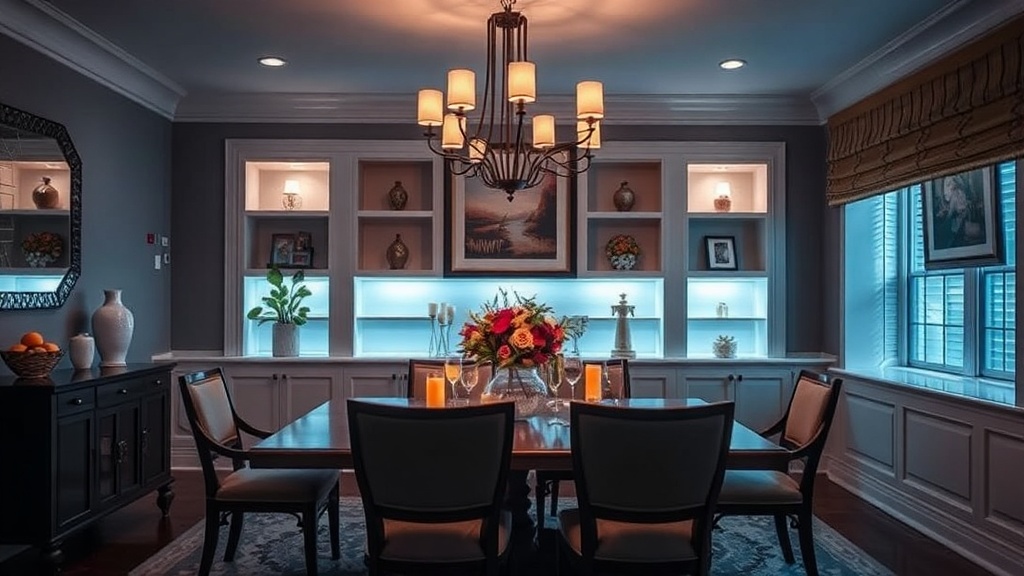
A functional dining room requires three distinct layers of light to create depth. Without these, the room will always feel two-dimensional and sterile. Think of these layers as the structural components of your atmosphere.
- Ambient Lighting (The Foundation): This is the general illumination that allows you to move through the room without tripping. It should be soft and indirect. Instead of a single bright ceiling fixture, consider recessed lighting on a dimmer or even a floor lamp in a nearby corner to wash the walls with light.
- Task Lighting (The Focus): In a dining room, the task is eating and conversation. This is typically your pendant or chandelier. The goal here is not to light the whole room, but to illuminate the surface of the table specifically.
- Accent Lighting (The Texture): This layer highlights architectural features or decor. A small picture light above a piece of art or a spotlight on a sideboard adds a sense of luxury and prevents the corners of the room from falling into total darkness.
Solving the Pendant Problem: Height and Scale
One of the most common technical errors is hanging a pendant light at the wrong height. If the fixture is too high, the light disperses too widely, creating a flat, uninspired glow. If it is too low, it becomes a physical obstacle that prevents eye contact across the table. For a standard dining table, the bottom of your light fixture should sit between 30 and 36 inches above the tabletop. This creates an intimate "pool" of light that keeps the focus on the meal and the people, rather than the ceiling.
Scale is the second major culprit. A tiny pendant over a large farmhouse table looks like an afterthought, while an oversized sculptural piece in a small breakfast nook can make the room feel claustrophobic. If you are working with a small footprint, you might find that maximizing every square foot requires a more streamlined approach to lighting. In these cases, opt for a light with a transparent shade—like glass or acrylic—to provide illumination without adding visual weight to the room.
The Science of Color Temperature (Kelvin)
If your dining room feels like a hospital cafeteria, the problem is likely your Kelvin rating. Light temperature is measured in Kelvin (K). A lower number indicates a warmer, yellower light, while a higher number indicates a cooler, bluer light. For dining areas, you should strictly avoid "Daylight" bulbs (5000K+) or "Cool White" bulbs (4000K+). These are designed for productivity in offices and garages, not for relaxation.
For a welcoming dining experience, aim for bulbs in the 2200K to 2700K range. This mimics the warmth of candlelight or a sunset. If you have a modern, minimalist space with many hard surfaces like marble or polished concrete, you might be tempted to use cooler lights to emphasize the "clean" look, but this will ultimately make the room feel cold and uninviting. A warm 2700K bulb will soften the edges of those hard materials and make the space feel lived-in.
Eliminating Glare and Harsh Shadows
Glare occurs when light hits a reflective surface—like a polished mahogany table or a crystal wine glass—and bounces directly into your eyes. To prevent this, you must consider the directionality of your light. A direct, downward-facing bulb is a glare machine. To mitigate this, look for fixtures that use diffused light. This includes:
- Opal Glass Shades: These scatter light in all directions, softening the output.
- Fabric Shades: These absorb and soften light, creating a much gentler glow.
- Indirect Lighting: Fixtures that direct light upward toward the ceiling (uplighting) create a soft, indirect bounce that illuminates the room without a visible light source.
Furthermore, pay attention to the "shadow zones." If your dining table is positioned directly under a single bright light, the people sitting at the table will be cast in shadow. By adding a small lamp on a sideboard or a dimmable floor lamp in the corner, you fill those "voids" with light, creating a balanced environment where everyone’s face is clearly visible and flattering.
The Essential Role of Dimmers
If you take only one piece of advice from this guide, let it be this: Install dimmer switches. A dining room is a multi-functional space. In the afternoon, you might need brighter light to read or work at the table. In the evening, you need a low-intensity glow for a dinner party. A single brightness level cannot accommodate both.
A dimmer switch allows you to control the "mood" of the room by adjusting the voltage sent to the bulbs. This is the most cost-effective way to transform a room from a functional eating area into a sophisticated dining environment. When hosting, turn the lights down to 30% or 40%. This lower light level encourages people to relax, lowers the perceived volume of the room, and makes the dining experience feel more intentional and high-end.
A Checklist for Your Dining Room Lighting Audit
Before you go out and buy a new chandelier, perform a quick audit of your current setup using these criteria:
- Check the Kelvin: Are your bulbs 2700K or lower? If they are 5000K, swap them immediately.
- Measure the Height: Is your pendant 30-36 inches above the table? If it's higher, the light is too dispersed.
- Identify the Shadows: Turn off the overhead light and use a flashlight. Where are the dark corners? That is where you need an accent lamp or a floor lamp.
- Assess the Reflection: Does the light hit your glassware or table surface in a way that causes a blinding spot? If so, switch to a diffused shade.
- Verify Control: Do you have a dimmer? If not, check if your current fixture is "dimmable" and add a compatible dimmer switch to your next renovation.
Good design is not about how much light you have, but how you distribute it. By focusing on layers, temperature, and height, you move from simply "lighting a room" to "crafting an atmosphere."
Steps
- 1
Check Your Bulb Temperature
- 2
Add Layered Light Sources
- 3
Adjust Pendant Height
- 4
Incorporate Dimmers