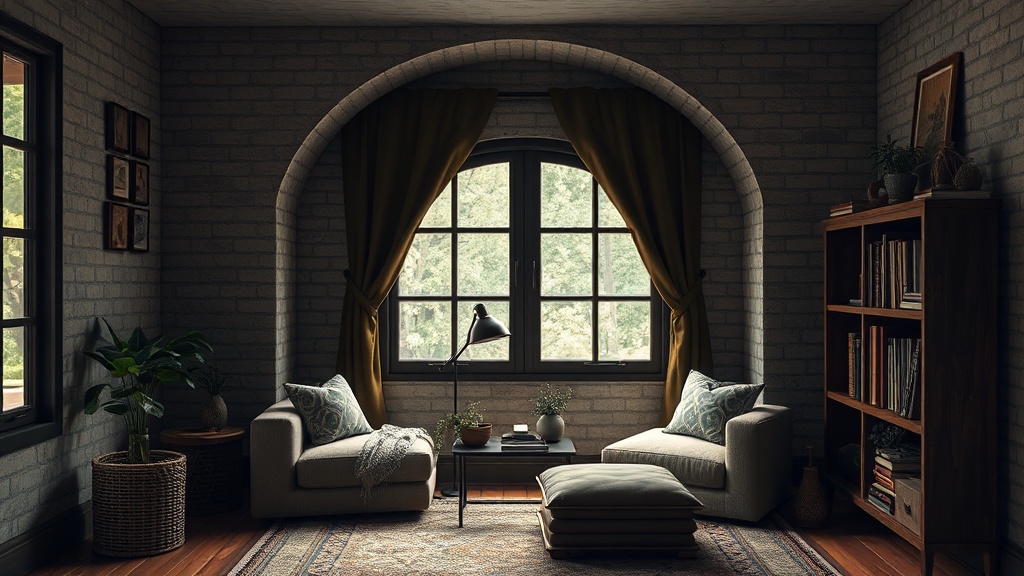
Layering Textures to Build a Cozy Reading Nook

A single velvet armchair, a heavy wool throw, and the rhythmic scratch of a page turning in a quiet room. This is the anatomy of a reading nook. Most people think a reading nook is just a chair in a corner, but that's a mistake. A truly functional nook requires a deliberate layering of tactile surfaces to create a sense of enclosure and comfort. We're going to look at how to mix hard and soft surfaces, manage light through different materials, and use texture to define a small space without making it feel cluttered.
In my years teaching architectural design, I've seen people spend thousands on expensive furniture only to end up with a room that feels cold and sterile. The problem isn't the price tag; it's the lack of tactile variety. If every surface in your nook is smooth—a leather chair, a glass side table, a silk pillow—the space will feel uninviting. You need friction. You need weight. You need the visual and physical "bumpiness" that only texture provides.
How Do I Mix Textures Without It Looking Messy?
You mix textures by balancing smooth, matte, and highly tactile surfaces in a way that creates a visual hierarchy. Think of it as a mathematical equation rather than an art project. If you have a high-texture item like a chunky knit wayfair throw, you need a "grounding" element like a smooth wooden side table or a solid linen curtain to keep the eye from getting overwhelmed.
Start with your base. Your chair is your anchor. If you're using a sleek, modern chair from a brand like West Elm, the material itself is likely a smooth weave or a smooth leather. To make that chair feel like a "nook" and not just a piece of furniture, you need to introduce a contrasting texture immediately. A linen pillow adds a relaxed, organic feel, while a heavy wool blanket adds weight and warmth.
Here is a simple way to categorize your layers:
- The Foundation (The Smooth): This is your chair or your floor. It provides the structural stability.
- The Mid-Layer (The Matte): Think linen curtains, cotton pillows, or a matte ceramic lamp. These soften the edges.
- The Accent (The Tactile): This is the "wow" factor. A chunky knit throw, a sheepskin rug, or a velvet cushion.
The catch is not to overdo the "tactile" category. If everything is fuzzy or bumpy, nothing stands out. I often tell my students to follow the 70/30 rule: 70% predictable, comfortable textures and 30% high-interest, high-texture pieces. This prevents the space from looking like a pile of laundry.
For a deeper look at how to structure your larger seating areas before narrowing down to a nook, check out the anatomy of a cohesive living room. It helps you understand how to scale these elements within a larger room.
What Materials Make a Space Feel Cozier?
Natural materials like wool, linen, wood, and stone are the most effective tools for building a cozy atmosphere. Synthetic materials often lack the "soul" or the subtle irregularities that make a space feel lived-in. When you choose materials, you aren't just choosing a color; you're choosing a sensation.
Consider the weight of your textiles. A lightweight cotton sheet won't do much for a reading nook, but a heavy, weighted blanket provides a sense of security. If you want to look at the science of why certain textures affect our psychology, the study of haptics explains how touch influences our perception of space and comfort.
Let's look at a comparison of common nook materials and the "vibe" they provide:
| Material | Texture Type | Best Use Case |
|---|---|---|
| Linen | Soft/Matte | Curtains or light pillows; adds an organic, "undone" feel. |
| Velvet | Rich/Lustrous | The main chair; adds weight and a sense of luxury. |
| Wool | Heavy/Rough | Throws or rugs; provides thermal and visual warmth. |
| Leather | Smooth/Firm | Side tables or accent chairs; provides a grounding, sturdy element. |
| Bouclé | Nubby/Highly Tactile | Accent pillows; adds a modern, high-interest texture. |
When I'm designing a space, I always look for a "hero" texture. This might be a single, oversized velvet armchair that acts as the centerpiece. Once you have that hero, every other texture you add should be a supporting actor. If your chair is bouclé (that bumpy, looped yarn texture that's very popular right now), your pillow should probably be a smooth linen to avoid a "texture clash."
The Role of Light and Texture
Light is the secret ingredient that makes texture visible. If you use a harsh, overhead LED bulb, your textures will look flat and lifeless. To make a linen pillow or a wool rug actually "pop," you need directional light. A small task lamp with a warm bulb—something around 2700K to 3000K—will create shadows within the weaves of your fabrics. These shadows are what give the room depth.
I always recommend a tripod floor lamp or a small, sculptural table lamp. The goal is to create "pools" of light rather than a uniform wash. This mimics the way light works in nature and makes the nook feel like a private sanctuary rather than a brightly lit corner of an office.
How Much Does It Cost to Create a High-End Nook?
You don't need a designer budget to achieve a high-end look; you just need to spend your money on the right things. The most expensive-looking part of a nook is usually the largest item—the chair. However, the "soul" of the nook comes from the smaller, more affordable textile layers.
If you are on a strict budget, don't buy a cheap, synthetic "set" of pillows and throws. A set of cheap, shiny polyester pillows looks cheap. Instead, buy one high-quality, heavy linen pillow and one high-quality wool throw. The quality of the material matters more than the quantity of items. One real wool blanket from a brand like Patagonia (or a similar high-quality textile manufacturer) will look and feel much better than three cheap acrylic ones.
Here is a breakdown of how to allocate a $300 "Nook Budget":
- The Anchor (60% - $180): This is your chair or a high-quality floor cushion. If you already have a chair, spend this on a high-quality rug to define the space.
- The Comfort (25% - $75): A substantial throw blanket. Look for weight and natural fibers.
- The Detail (15% - $45): One or two accent pillows with interesting textures like corduroy or linen.
Worth noting: thrift stores are gold mines for texture. A vintage wooden side table or a heavy brass lamp can add a sense of history and "weight" that a new, plastic-heavy piece from a big-box store simply can't match. A wooden table provides a hard, organic texture that balances a soft velvet chair perfectly.
If you're worried about the scale of your furniture in a small corner, I've written more about managing proportions in this guide on scale and lighting. It’s a common pit feeling that your furniture is "eating" the room.
One final tip: don't forget the "fifth wall"—the ceiling. If your nook is in a corner, even a small change like a textured wallpaper or a slightly darker paint color on the ceiling can make the space feel more enclosed and intentional. It's not just about the floor and the chair; it's about the entire volume of the space you're occupying.
Steps
- 1
Start with a Base Material
- 2
Add Softness with Textiles
- 3
Introduce Natural Elements
- 4
Balance with Hard Surfaces