The Architecture of Ego: What Eileen Gray Teaches Us About Real Spaces

International Women's Day deserves more than a branded quote card and a "support women-owned" coupon code.
So let's talk about a white house on the Côte d'Azur, a set of unsolicited murals, and the design lesson too many living rooms still ignore.
Eileen Gray's E-1027 was never meant to be a monument. It was meant to be lived in. That's why it still feels radical.
The E-1027 Incident Wasn't Gossip. It Was a Warning.
Gray designed E-1027 in the late 1920s with unusual control: circulation, light, built-ins, furnishings, sightlines, privacy, the whole thing. It was coherent, quiet, and exact.
In 1938-39, Le Corbusier painted murals on its walls without Gray's consent. The intervention did not follow her interior logic; it overrode it.
If you want a clean metaphor for how women in design get treated, there it is: a complete spatial argument overwritten by someone who assumed his gesture mattered more.
That history is why E-1027 is not just "a famous modernist villa." It's a case study in authorship, ego, and what happens when design stops serving people and starts serving performance.
Designing for Movement, Not Monuments
Gray and Lilly Reich both worked in a mode that still gets under-credited: design for bodies in motion, not static hero shots.
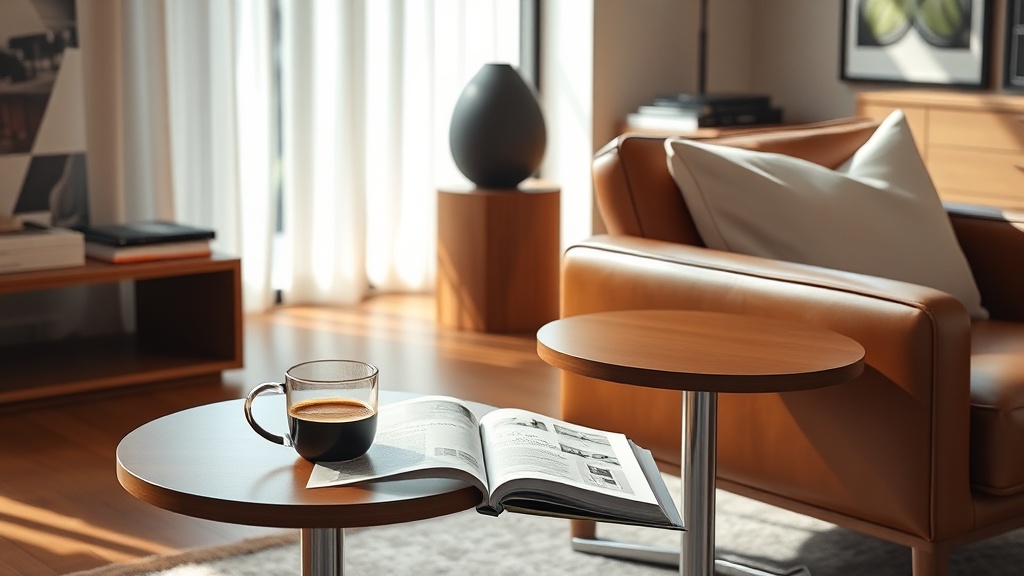
Gray's adjustable E-1027 side table is the obvious example. It shifts, adapts, negotiates with daily life. That's human-centered design. Not precious. Not rigid.
Reich's exhibition and furniture work, including her documented collaboration context around the Barcelona Pavilion era, follows a similar logic: material intelligence, staging of use, spatial choreography, not just object worship.
This is where many modern interiors still fail. They borrow the aesthetic language of modernism and skip its best question: How does a person actually move through this?
The Instagram Chair Trap
You know the one. Sculptural profile. Perfect silhouette. Feels like a flex, then quietly fails in daily use.
Ego-driven furniture usually has three tells:
- It photographs better than it functions.
- It ignores adjacency (side table height, arm reach, lamp placement, walking clearance).
- It turns the room into a museum of single objects instead of a system of use.
If your living room feels "off," another statement piece usually won't fix it. More often, one of these is broken:
- Rug scale (too small, so everything floats and traffic gets awkward)
- Seat depth vs. your actual body and posture habits
- Table heights that force shoulder tension
- Pathways blocked by decorative ambition
Real spaces are choreography. Bad rooms are traffic jams with better lighting.
How to Source Human-Centric Modernism Without Spending $10K
You do not need a licensed icon to get the principle right. You need clear criteria and discipline.
Use this sourcing filter before you buy:
Use test: Can you sit, reach, read, set down a drink, and stand up naturally?Adjustment: Does anything adapt (height, tilt, position, modularity)?Material honesty: Is the construction built to age, or built to look good online for one season?Flow: Does it preserve a minimum 30-36 inch circulation path where needed?System fit: Does it solve a function your room is currently failing at?
Where to look (budget-conscious to investment):
- Chairish and 1stDibs for vintage pieces with documented dimensions, condition notes, and provenance signals
- Design Within Reach Outlet, Herman Miller sales windows, and reputable secondhand marketplaces where pricing can land below full retail
- High-quality reproductions with transparent specs (seat height, depth, back angle, weight capacity), not just pretty renders
My rule: if the listing gives you twelve mood photos but hides dimensions and joinery details, walk.
International Women's Day, but Make It Practical
On March 8, 2026, the useful move is not symbolic applause. It's changing what we reward in our homes.
Stop funding ego objects. Start funding intelligence: adaptability, comfort, and rooms that respect how people live.
Eileen Gray already gave us the playbook. The question is whether you want a room that performs taste, or a room that supports life.
Sources and Further Reading
- ArchDaily: Eileen Gray, Le Corbusier, and the E-1027 House
https://www.archdaily.com/902152/eileen-grey-le-corbusier-and-the-e-1027-house-a-tale-of-architecture-and-scandal - Metropolis: The Sordid Saga of Eileen Gray's E-1027 House
https://metropolismag.com/viewpoints/e1027-villa-eileen-gray-crowdfund-preservation/ - Fundacio Mies van der Rohe: Lilly Reich Grant context
https://miesbcn.com/project/lilly-reich-grant-for-equality-in-architecture/ - MoMA collection record (Mies van der Rohe + Lilly Reich, Barcelona Exhibition materials)
https://www.moma.org/collection/works/405033 - Chairish marketplace
https://www.chairish.com/ - 1stDibs marketplace
https://www.1stdibs.com/