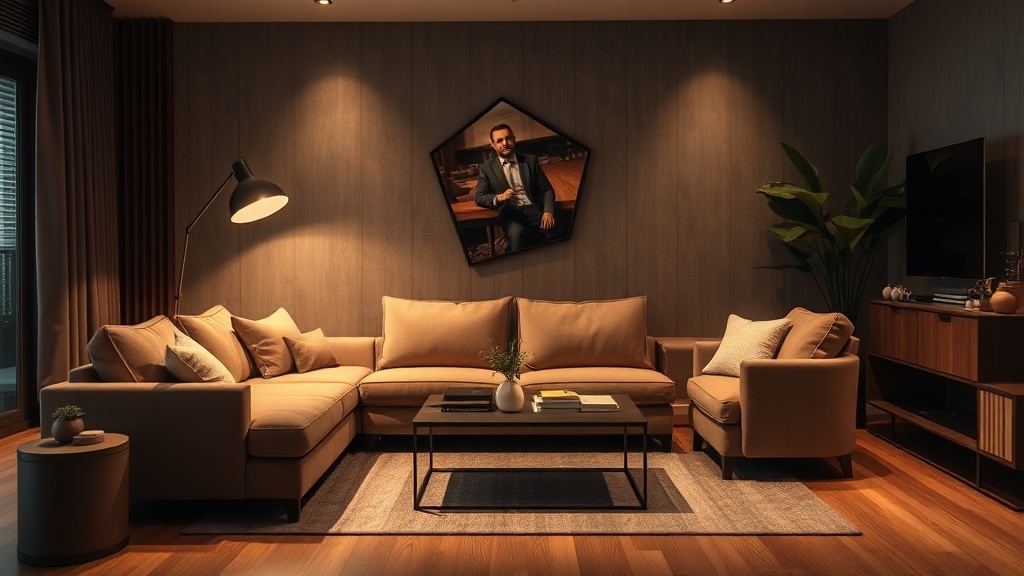
Why Your Living Room Feels Unfinished

You are sitting on your sofa, looking around the room, and something feels off. The furniture is expensive, the color palette is cohesive, and the rug is high-quality, yet the space lacks a certain "soul." It feels less like a curated living room and more like a high-end showroom waiting for a human to arrive. This sensation of an "unfinished" room usually stems from a lack of architectural tension and sensory layering. This post breaks down the three structural reasons your living room feels hollow—scale, lighting, and texture—and provides the technical fixes to move your space from a catalog page to a lived-in home.
The Scale Disconnect
The most common reason a room feels incomplete is a fundamental misunderstanding of scale and proportion. Most people shop for furniture based on the footprint of the item rather than the volume of the room. If you have eighty-foot ceilings but a single, medium-sized pendant light, the room will feel cavernous and cold. Conversely, if you have a low-ceilinged apartment and a massive, overstuffed sectional, the room will feel claustrophobic.
To fix this, you must look at the verticality of your space. A room needs "anchor points" at different heights to draw the eye upward. If all your furniture sits below the 30-inch mark, the top half of your room is essentially dead space. This is why a room feels "unfinished"—you are only decorating the bottom third of the room.
The Rule of Three Heights
To create a sense of completion, ensure your decor hits at least three distinct vertical levels:
- The Low Level: This is your foundation—the rug, the coffee table, and the base of your sofa.
- The Mid Level: This includes your lamps, art, and any tabletop objects. This is where most people stop, which is a mistake.
- The High Level: This is where the "finished" look happens. Think floor-to-ceiling drapery, tall architectural plants like a Fiddle Leaf Fig, or a high-hanging light fixture.
If your windows are bare, the room will never feel finished, regardless of how nice your sofa is. Install curtain rods much higher than the actual window frame—ideally 4 to 6 inches below the ceiling—to create the illusion of height. This adds a structural element to the walls that makes the room feel "wrapped" rather than just occupied.
The Lighting Layering Problem
If you are relying on a single overhead light (often called the "big light"), your room will always feel flat and clinical. Overhead lighting provides a singular, harsh plane of light that flattens the dimensions of your furniture and creates unflattering shadows. A finished room requires "pools of light" rather than a single "flood of light."
Architecturally, light should be used to highlight different zones within the room. You need a mix of ambient, task, and accent lighting to create depth. If you lack built-in recessed lighting or architectural sconces, you can achieve this through strategic placement of portable fixtures.
Creating Light Zones
A well-designed living room should have at least three distinct light sources that do not rely on the ceiling. For example:
- Task Lighting: A dedicated floor lamp next to a reading chair. This defines the chair as a functional nook.
- Ambient Layering: Table lamps with fabric shades placed on side tables or consoles. These soften the edges of the room and provide a warm, low-level glow.
- Accent Lighting: Small, battery-operated LED uplights placed behind a large plant or a sculptural object. This adds a sense of drama and highlights the "bones" of your decor.
For those who cannot rewire a room, you can upgrade your lighting without rewiring by using smart bulbs and plug-in sconces. The goal is to ensure that when the main light is off, the room still has shape and dimension through soft, localized illumination.
The Missing Sensory Layer
The final reason a room feels unfinished is a lack of tactile variety. A room filled with smooth surfaces—leather sofas, glass coffee tables, and hardwood floors—will feel visually "thin." Without texture, the eye has nothing to catch onto, and the space feels sterile. This is often referred to as a "flat" room.
To solve this, you must introduce a variety of materials that react differently to light. A velvet pillow absorbs light, a silk rug reflects it, and a wooden side table provides a matte, organic texture. This interplay of light and shadow is what creates the feeling of a "rich" environment.
The Texture Checklist
When reviewing your living room, check for the presence of these four categories. If you are missing more than one, your room will feel incomplete:
- Soft/Organic: Woolen throws, linen curtains, or cotton pillows. These soften the hard lines of the architecture.
- Hard/Reflective: A marble tray, a brass lamp base, or a glass vase. These add "sparkle" and a sense of intentionality.
- Natural/Raw: Jute rugs, wooden bowls, or stone coasters. These prevent a room from feeling too "perfect" or artificial.
- Structural/Patterned: A textured wallpaper or a rug with a subtle geometric weave. This provides a visual anchor for the eyes.
If your room feels one-dimensional, look at ways to use texture to make a flat room feel expensive. Instead of buying more "stuff," try swapping a smooth polyester pillow for a heavy linen one, or replace a glass coffee table with a reclaimed wood version. It is about the quality of the surface, not the quantity of the objects.
The "Human" Element: Avoiding the Museum Trap
A common mistake is over-curating. A room that is perfectly symmetrical and devoid of any "imperfect" objects feels like a museum, not a home. A finished room needs a sense of movement and a touch of the organic. This is often achieved through "asymmetrical balance."
If you have two identical end tables and two identical lamps, the room is balanced, but it is also static. To add life, try grouping objects in odd numbers. A stack of three books of varying heights, topped with a small ceramic bowl and a single branch in a vase, creates a "moment" that feels curated rather than staged. The varying heights create a visual path for the eye to follow, making the space feel dynamic.
Finally, consider the "living" elements. A room without greenery feels stagnant. Plants add a layer of organic movement and a different kind of texture that inanimate objects cannot replicate. However, ensure your plants are suited to your environment; a dying plant is a visual cue of neglect, which can instantly break the "designed" feel of a space. If you struggle with greenery, research why your indoor plants keep dying to ensure your botanical accents actually thrive.
In summary, a finished living room is a result of intentional layering. Check your vertical scale, diversify your light sources, and audit your textures. When you stop decorating the floor and start decorating the volume of the room, the "unfinished" feeling will vanish.